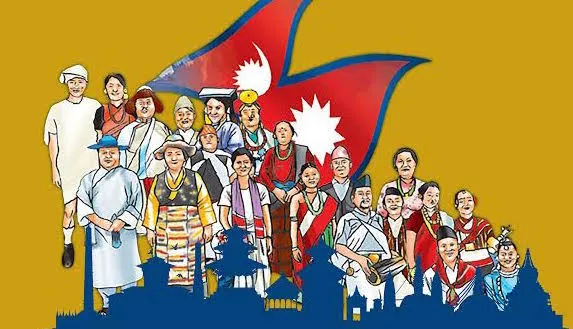
When discussing Nepal’s diversity, we often celebrate the Sherpas, Newars, and Gurungs. However, Nepal is also home to dozens of smaller, often invisible communities that have been classified by the government as “Endangered” (Loponmukh) or “Highly Marginalized” (Ati Simantikrit).
These groups face existential threats—from loss of land and language to systemic caste-based discrimination. According to government classifications, 10 groups are considered “Endangered” (with populations as low as 180 people) and 12 are “Highly Marginalized” [citation:1][citation:7]. Additionally, the Dalit and Muslim communities face deep structural exclusion despite their larger numbers.
The Endangered Groups (Loponmukh)
These communities are on the brink of cultural extinction due to tiny population sizes and extreme remoteness.
- The Raute: Nepal’s last nomadic hunters and gatherers. They live in the forests of western Nepal (Surkhet, Dailekh, Salyan) and move every few weeks. Their population is estimated at just a few hundred, and they face immense pressure from deforestation and government attempts to settle them [citation:1][citation:19].
- The Kusunda: With a population of fewer than 200, the Kusunda are one of the most endangered ethnic groups in the world. Their language, Kusunda, is a language isolate (unrelated to any other known language) and has only a handful of fluent speakers left [citation:1][citation:19].
- The Chepang: Semi-nomadic people who traditionally practiced slash-and-burn agriculture in the hills of central Nepal (Chitwan, Makwanpur, Dhading). Today, nearly 95% of Chepangs are landless and depend on foraging for wild yams and roots. They are among the most economically deprived groups in the country [citation:6].
The Highly Marginalized Groups (Ati Simantikrit)
These groups face extreme poverty, landlessness, and social exclusion. The list includes communities like the Thami, Bote, Dhanuk, and Baramu [citation:1][citation:7].
- The Thami: An indigenous group primarily found in the remote hills of Dolakha and Sindhupalchok. Due to their remote location and lack of political representation, they have historically been overlooked by development programs. Many Thami people have even hidden their identity to avoid discrimination, passing themselves off as Tamang or other larger groups [citation:12][citation:18].
- The Bote: Traditionally fishermen and boatmen who lived along the rivers of Chitwan and Nawalparasi. Their traditional livelihood has been severely impacted by the creation of national parks and conservation laws that restricted their access to rivers.
The Dalit Community: Breaking the Chains of Caste
The Dalit population (meaning “oppressed” or “broken”) makes up approximately 13% of Nepal’s population [citation:17]. Despite the abolition of the caste system in 1963, Dalits continue to face systemic, descent-based discrimination.
- “Untouchability”: In many rural areas, Dalits are still forbidden from entering temples, using communal water taps, or even sitting inside non-Dalit homes.
- Economic Exclusion: Dalits are disproportionately represented among the landless and poorest of the poor. Many are still confined to traditional “unclean” occupations like manual scavenging or leatherwork.
- Justice Denied: According to Amnesty International, Dalits face a “culture of impunity.” When Dalit women and girls are victims of caste-based violence, police often refuse to register cases or push for informal mediation rather than prosecution [citation:11].
The Muslim Community: A Minority Within the Margins
Muslims constitute roughly 4.3% of Nepal’s population, with the vast majority living in the Terai region [citation:3]. While not an ethnic group per se, they are recognized as a minority facing significant exclusion.
- Educational Disadvantage: Muslim communities have some of the lowest literacy rates in Nepal. Historically, they were excluded from state schools, and many families still rely on Madrasa education, which is not always integrated into the mainstream curriculum [citation:10].
- Under-representation: Muslims are severely under-represented in government service, politics, and the judiciary. Even in districts where they are a significant minority, they often lack a voice in local decision-making [citation:3].
The Struggle for Recognition
One of the biggest challenges for these communities is invisibility. Many groups, like the Thami, have been undercounted in censuses because they fear discrimination or because government officials do not recognize their names [citation:12].
Furthermore, the Nepali government’s affirmative action policies, while well-intentioned, often fail to reach the “bottom of the bottom.” As one analysis notes, “Of 101 caste/ethnic groups of Nepal, 70 have a population of less than 100,000. Their interests and concerns are generally ignored” [citation:19].
How You Can Help as a Traveler
If you are traveling to Nepal, you can support these communities ethically:
- Buy Local: Purchase handicrafts directly from marginalized communities (like Thami slate products or Chepang woven goods) to ensure the money goes directly to the artisans.
- Choose Community Homestays: Opt for homestays run by indigenous and marginalized families in areas like Chitwan (Tharu) or the hills (Chepang).
- Educate Yourself: When visiting heritage sites, ask about the history of the marginalized people who built them or lived there.
- Respect: Always ask before taking photos and treat all people with equal dignity, regardless of their caste or ethnicity.
Frequently Asked Questions
What does “Loponmukh” mean?
“Loponmukh” is the Nepali term for “Endangered.” It refers to ethnic groups with extremely small populations that are at risk of cultural or physical extinction, such as the Raute and Kusunda.
Who are the Dalits?
Dalits are members of the “lower” castes in the traditional Hindu system who have historically been subjected to “untouchability” and severe discrimination. They make up about 13% of Nepal’s population.
How many endangered groups are there in Nepal?
The government officially lists 10 groups as “Endangered” and 12 as “Highly Marginalized” [citation:1].
What challenges do Muslims in Nepal face?
Muslims in Nepal face educational disadvantages, under-representation in government, and a lack of land ownership, which contributes to higher poverty rates compared to the national average [citation:3].
Read next: The Chepang People — A deep dive into the semi-nomadic indigenous group of central Nepal.
Related districts: Surkhet, Dolakha, Chitwan, Rautahat, Bara