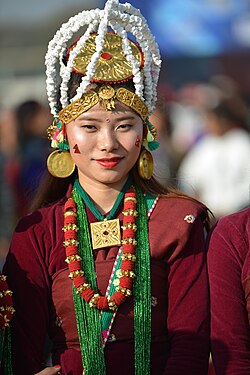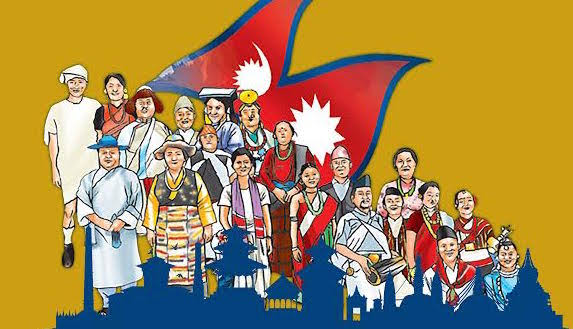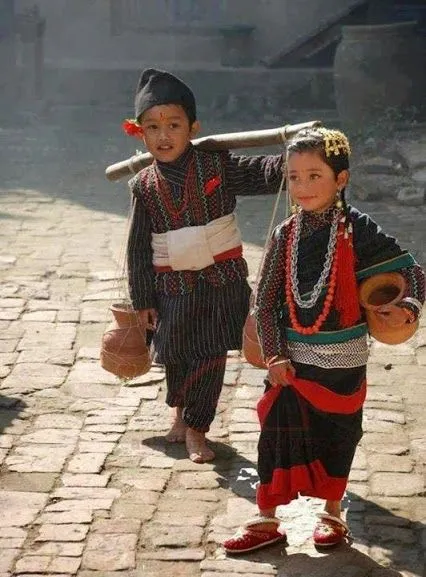
The Newars (नेवार) are the indigenous inhabitants of the Kathmandu Valley and one of the most culturally distinct communities in Nepal. For over a thousand years, they have shaped the valley’s art, architecture, cuisine, festivals, and trade. Without the Newars, there would be no Kathmandu as we know it.
Today, the Newar community numbers about 1.3 million people — roughly 5% of Nepal’s population — but their influence on the country’s culture far exceeds their numbers.
Who Are the Newars?
The Newars are a Tibeto-Burman and Indo-Aryan ethnic group native to the Kathmandu Valley. Their language, Nepal Bhasa (also called Newari), belongs to the Tibeto-Burman family and has its own script, Prachalit (also called Nepal Lipi), which is still used in traditional manuscripts and inscriptions.
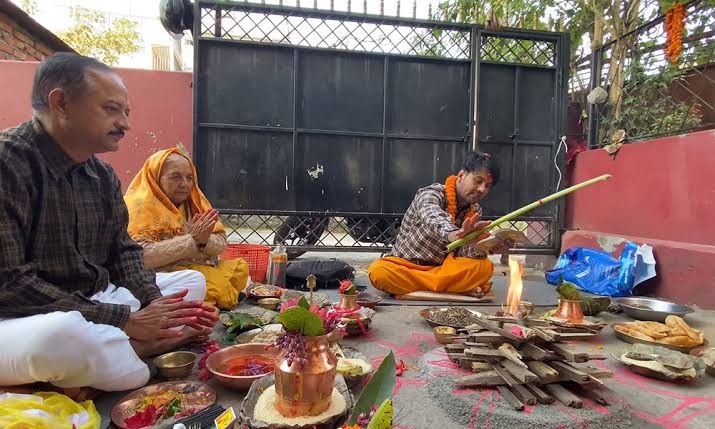
The Newar community is internally diverse. It includes both Hindu and Buddhist families, and is traditionally organized into a complex caste system with dozens of sub-groups, including:
- Shrestha: administrators, traders, and nobles
- Maharjan: farmers and merchants
- Shakya: artisans and metalworkers (also traditionally Buddhist priests)
- Bajracharya: Buddhist priests
- Jyapu: farmers
- Kumhar: potters
- Silpakar: craftspeople
A Golden Age of Art and Architecture
The Newars are famous for their artistic and architectural achievements. Almost every iconic building in the Kathmandu Valley — the temples, palaces, courtyards, and stupas — was built by Newar craftsmen.
Famous examples:
- Patan Durbar Square: A UNESCO World Heritage Site famous for its Newar architecture
- Bhaktapur Durbar Square: A medieval city preserved in its Newar form
- Swayambhunath and Boudhanath Stupas: Buddhist monuments with distinctive Newar detailing
- Krishna Mandir (Patan): A 17th-century stone temple built by Newar craftsmen
- Nyatapola Temple (Bhaktapur): Nepal’s tallest pagoda temple
Newar craftsmen were also renowned for their metalwork — bronze, brass, and gold statues of Hindu and Buddhist deities — and their woodcarving, which adorned windows, doors, and roof struts across the valley.
Newar Cuisine
Newar food is arguably the most sophisticated cuisine in Nepal. It uses complex spice blends, fermented ingredients, and elaborate preparation techniques. Signature dishes include:
- Bara: A fried lentil pancake, often topped with minced meat or egg
- Chatamari: A rice-flour crepe, sometimes called “Newar pizza”
- Yomari: A steamed rice-flour dumpling filled with molasses and sesame
- Choila: Spicy grilled buffalo meat
- Kwati: A soup of nine sprouted beans
- Samay Baji: A ceremonial platter with beaten rice, meat, eggs, and pickles
- Aila: Traditional Newar rice liquor
A Newar feast (Bhoye) is a multi-course event with dozens of dishes served in a specific order.
Newar Festivals
The Newar calendar is filled with festivals unique to the community, many of which are the largest in the Kathmandu Valley:
- Indra Jatra: An eight-day festival in Kathmandu featuring chariot processions and masked dances
- Bisket Jatra: Bhaktapur’s New Year festival with chariot tug-of-war
- Yomari Punhi: A winter festival celebrating the yomari dumpling
- Mha Puja: Self-worship during Tihar, celebrating one’s own life force
- Gai Jatra: A festival honoring those who died in the past year
These festivals are central to Newar identity and draw thousands of visitors each year.
Traditional Occupations
Historically, the Newars dominated trade and craftsmanship in the Kathmandu Valley. They ran caravans between Tibet and India, brought goods through mountain passes, and built a thriving merchant culture.
Key traditional occupations:
- Trade: Long-distance trade with Tibet, India, and China
- Metalwork: Statues, utensils, and ornaments
- Woodcarving: Windows, doors, and temple fittings
- Pottery: Clay pots and ritual objects
- Weaving: Traditional textiles and carpets
- Farming: Rice, vegetables, and spices in the valley
Many of these trades are still practiced today, though modern economics has shifted the community into education, government, and business.
The Newars Today
Today, Newars are one of the most educated and urbanized communities in Nepal. They are prominent in:
- Politics and government
- Business and trade
- Arts and literature
- Education and academia
- Tourism and hospitality
The Nepal Bhasa language, however, faces challenges. Fewer young Newars speak it fluently, and the script is not widely taught in schools. Community organizations and language activists are working to preserve it.
Newar Identity and Continuity
For all their integration into modern Nepal, Newars maintain a strong sense of identity. This is visible in:
- Their continued celebration of traditional festivals
- Their distinctive cuisine
- Their commitment to preserving temples and heritage sites
- The revival of Nepal Bhasa among younger generations
- Newar communities abroad, from New York to London to Sydney
The Newars remind us that culture is not just about the past — it’s a living, evolving force that shapes the present.
Frequently Asked Questions
Who are the Newars?
The Newars are the indigenous people of the Kathmandu Valley, known for their art, architecture, cuisine, and festivals. They number about 1.3 million in Nepal.
What language do Newars speak?
Newars speak Nepal Bhasa (also called Newari), a Tibeto-Burman language with its own script, Prachalit. It is spoken by about 850,000 people.
What is Newar cuisine known for?
Newar cuisine is famous for its complex spice blends, fermented ingredients, and distinctive dishes like bara, chatamari, yomari, choila, and samay baji. A traditional Newar feast (bhoye) features dozens of dishes.
Are Newars Hindu or Buddhist?
Both. The Newar community includes Hindu and Buddhist families, and many Newar traditions blend elements of both religions.
Read next: The Sherpa People of the Everest Region — The legendary mountain community of Nepal’s highest valleys.
Related districts: Kathmandu, Lalitpur, Bhaktapur, Kavrepalanchok, Makwanpur