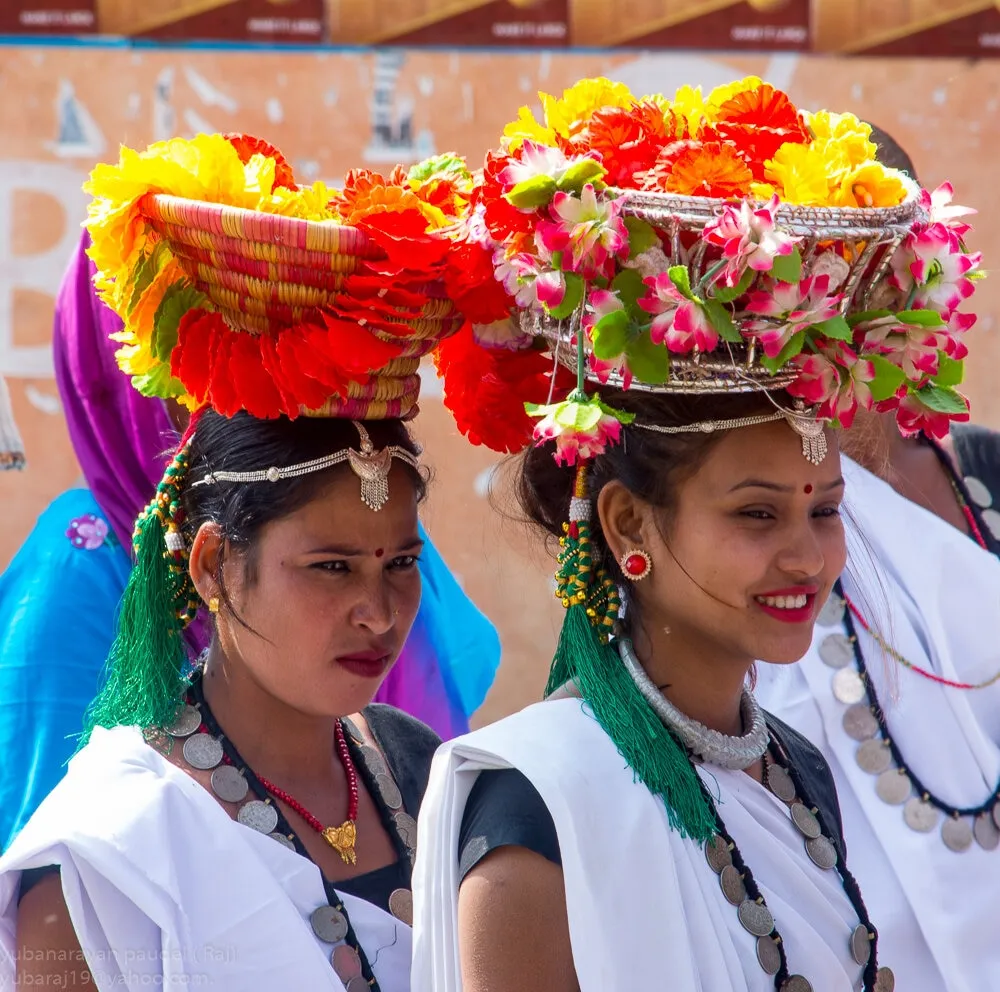
The Tharu people are the largest and one of the oldest indigenous ethnic groups of the Terai region—the southern plains of Nepal. They are the traditional inhabitants of the dense jungles and fertile farmlands stretching from the far-western border with India to the eastern border.
The Tharu are renowned for their distinct culture, their incredible historical resistance to malaria, and their deep, symbiotic relationship with the forests and wildlife of the Terai.
The Tharu of the Terai
The Tharu population is estimated to be around 1.8 million, making them one of the largest ethnic groups in Nepal. They live in the Terai districts such as Jhapa, Morang, Sunsari, Saptari, Udayapur, Chitwan, Nawalparasi, Dang, Banke, Bardiya, Kailali, and Kanchanpur.
They speak various dialects of the Tharu language, which belongs to the Indo-Aryan family, though there is significant linguistic variation across different regions.
Resistance to Malaria
Historically, the dense forests of the Terai were endemic to malaria, a disease that was deadly to outsiders. The Tharu people, however, possessed a genetic resistance to malaria (specifically, they carry a gene that protects against the parasite).
Because of this, they were the only people who could survive and thrive in the Terai for centuries. This isolation allowed them to maintain their distinct culture and traditions, untouched by the outside world for generations. It was only after the widespread use of DDT in the 1950s that outsiders began moving into the Terai in large numbers.
The Unique Tharu Mud Houses
One of the most striking features of Tharu culture is their traditional housing. Tharu villages are famous for their long, multi-room mud houses (known as Ghar or Aath Ghar).
These houses are built using a mixture of mud, cow dung, and straw. They are designed to be:
- Cool in the summer and warm in the winter.
- Resistant to floods.
- Natural mosquito repellents (the smoke from the kitchen keeps insects away).
The walls are often decorated with beautiful painted motifs and geometric patterns, showcasing the community’s artistic skills.
Culture and Festivals
Tharu culture is rich in music, dance, and festivals.
- Stick Dance: The most famous Tharu dance is the Stick Dance (Lathi Nach), performed by both men and women. It is energetic, acrobatic, and involves clashing sticks to a rhythmic beat.
- Maghi: The most important Tharu festival is Maghi (celebrated in January). It marks the New Year and the winter solstice, and it is a time for family gatherings, feasts, and traditional dances.
- Marriage Traditions: Tharu marriage customs are unique, including the practice of Badghar (a traditional community leader) who mediates in marriages and disputes.
Livelihood and Forest Connection
Traditionally, the Tharu were subsistence farmers, growing rice, mustard, and lentils. They also fished in the rivers and collected forest products.
Today, many Tharu people are involved in ecotourism and conservation. In areas like Chitwan National Park and Bardia National Park, Tharu villages often host homestays where tourists can experience their traditional way of life, cuisine, and culture. They play a crucial role in protecting the national parks.
Challenges
Despite their deep roots, the Tharu have faced historical exploitation. Under the Kamaiya system, many Tharu families were bonded laborers, forced to work for landlords to pay off generational debts. Although the government formally abolished the Kamaiya system in 2000, its effects are still felt today, and landlessness remains a significant issue for many Tharu families.
Frequently Asked Questions
Who are the Tharu people?
The Tharu are the largest indigenous ethnic group of Nepal’s Terai region, known for their unique mud houses and traditional culture.
Why are Tharu people resistant to malaria?
The Tharu people carry a specific genetic trait that provides natural resistance to malaria, allowing them to live in the malaria-endemic forests of the Terai for centuries.
What is a Tharu mud house?
Tharu mud houses are traditional, multi-room structures made of mud, cow dung, and straw. They are cool in summer and warm in winter and are famous for their painted walls.
What is the main Tharu festival?
The main festival is Maghi, celebrated in January, marking the Tharu New Year with feasts, music, and stick dancing.
Read next: The Chhetri and Brahmin People — The traditional ruling and priestly classes of Nepal’s hill society.