When people hear the word “Sherpa,” they often think of the elite mountaineers who guide climbers to the summit of Mount Everest. While this is true, being a Sherpa is much more than a job—it is a proud ethnic identity, a rich culture, and a way of life shaped by the highest mountains on Earth.
Who Are the Sherpas?
The Sherpas are an ethnic group native to the Solukhumbu region of northeastern Nepal, home to Mount Everest. They are of Tibeto-Burman origin and migrated from the Kham region of eastern Tibet to Nepal over 500 years ago.
Today, there are about 150,000 Sherpas living in Nepal. The name “Sherpa” actually comes from the Tibetan words shar (east) and pa (people)—meaning “people from the east.”
Life in the High Himalayas
Sherpa settlements are located at high altitudes, usually between 3,000 and 4,000 meters. Their traditional livelihood revolved around:
- Yak herding: Yaks provide milk, meat, wool, and dung for fuel.
- Trade: Historically, they traded salt, grain, and wool across the Nangpa La pass into Tibet.
- Agriculture: Growing cold-resistant crops like potatoes and buckwheat during the short summer.
The Sherpa and Mountaineering
The Sherpa people are internationally famous for their mountaineering skills and extraordinary physical endurance at high altitudes. When Nepal opened its borders to foreigners in the 1950s, the Sherpas quickly became the backbone of the Himalayan climbing industry.
Tenzing Norgay was one of the first two people to reach the summit of Mount Everest in 1953, alongside Sir Edmund Hillary. Today, Sherpas continue to set records, guide expeditions, and carry the majority of the equipment and supplies up the mountains. Their bravery and knowledge of the ice are unmatched.
Culture and Religion
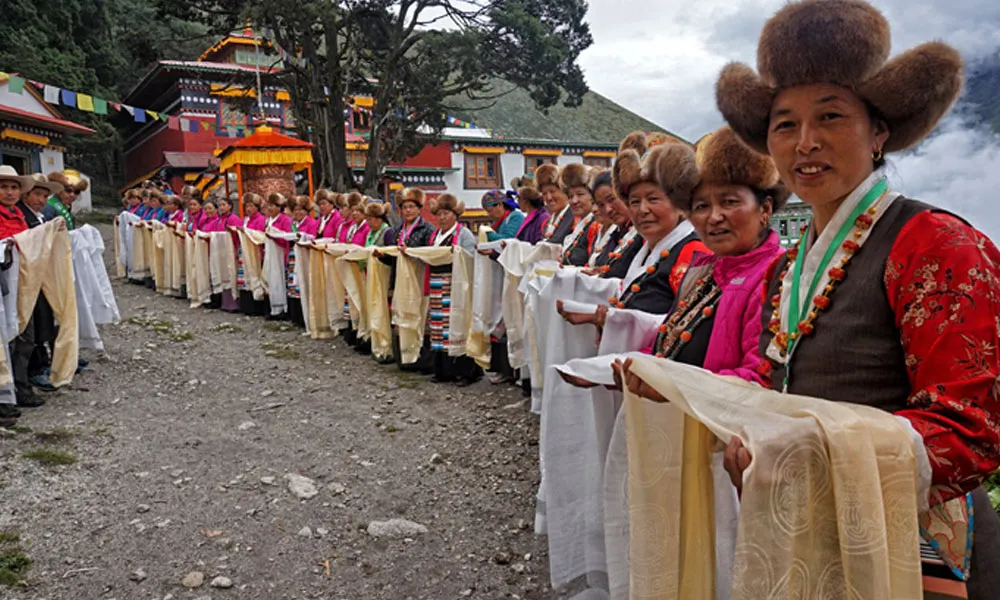
Sherpa culture is deeply rooted in Tibetan Buddhism.
- Monasteries: Every Sherpa village has a monastery (Gompa). The most famous is the Tengboche Monastery, located on the Everest Base Camp trail.
- Festivals: They celebrate festivals like Mani Rimdu (a masked dance festival), Losar (Tibetan New Year), and Dumji.
- Prayer Flags: You will see colorful prayer flags fluttering across the trails and bridges. They believe the wind carries the prayers and blessings to the heavens.
Sherpa Food
Sherpa cuisine is designed for cold weather and high energy:
- Tsampa: Roasted barley flour, often mixed with butter tea.
- Riki Kur: A traditional Sherpa potato pancake.
- Sherpa Stew: A hearty soup with dumplings, vegetables, and meat.
- Butter Tea: A salty tea made with yak butter, essential for warming up in the mountains.
Challenges Today
While Sherpas are famous globally, their communities face significant challenges. The effects of climate change are causing glaciers to melt and making the mountains more dangerous. The recent surge in Everest expeditions has also brought environmental concerns and controversy over the risks Sherpa guides face.
Despite these challenges, the Sherpa people remain resilient, deeply connected to their culture, and the undisputed guardians of the Himalayas.
Frequently Asked Questions
Are Sherpa people Nepali?
Yes, Sherpas are an ethnic group native to Nepal, primarily living in the Solukhumbu region.
Why are Sherpas so good at climbing?
Sherpas have lived at high altitudes for generations. Their bodies have adapted to low oxygen levels, giving them a genetic advantage in high-altitude environments.
What does “Sherpa” mean?
The word comes from Tibetan, meaning “people from the east” (shar = east, pa = people).
What religion do Sherpas follow?
Sherpas follow Tibetan Buddhism, and their daily lives are heavily influenced by Buddhist teachings, rituals, and festivals.
Read next: The Tamang People — The largest indigenous group in Nepal, known for their vibrant culture and resilience.
Related districts: Solukhumbu, Dolakha, Sindhupalchok, Kathmandu, Dhankuta