If you visit the Pashupatinath Temple in Kathmandu, you will likely encounter some of the most striking figures in Nepal: the Sadhus.
Sadhus are Hindu holy men who have renounced worldly life, including family, possessions, and social status, to dedicate themselves entirely to spiritual pursuits and the worship of Lord Shiva.
Who Are the Sadhus?
The word “Sadhu” means “good man” or “holy man” in Sanskrit. There are an estimated 4 to 5 million Sadhus in India and Nepal combined.
They are often recognizable by their appearance:
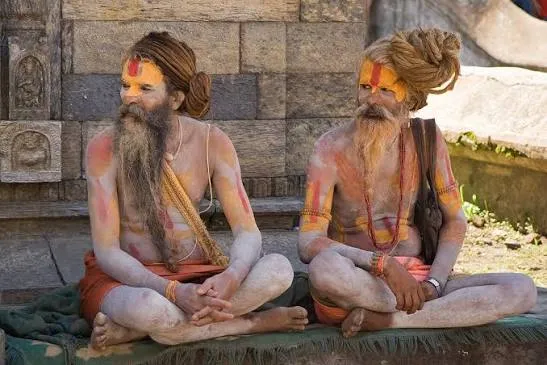
- Ash-smeared bodies: Many Sadhus smear their bodies with vibhuti (sacred ash), which symbolizes death and the impermanence of the physical body.
- Matted hair: They often grow their hair and beards long, twisting them into dreadlocks called jata.
- Minimal clothing: Many wear only a loincloth or simple robes, often in saffron or orange, the color of renunciation.
- The Trident (Trishul): Many carry a trident, the weapon of Lord Shiva.
- Rudraksha beads: They wear necklaces made of rudraksha seeds for protection and spiritual focus.
Types of Sadhus
There are two main types of Sadhus:
- Shaiva Sadhus: Devotees of Lord Shiva. They are the most common type seen at Pashupatinath.
- Vaishnava Sadhus: Devotees of Lord Vishnu. They typically wear white robes and mark their foreheads with a U-shaped tilak.
Among the Shaiva Sadhus, there are two main sects:
- Naga Sadhus: Warrior ascetics who are often naked and armed with swords or spears. They were historically organized into military orders to protect Hindu temples from invaders.
- Aghori Sadhus: The most extreme sect. They live in cremation grounds, smear themselves with ash from human cremations, and practice rituals that challenge social norms to achieve spiritual enlightenment.
Life at Pashupatinath
Pashupatinath is one of the most important gathering places for Sadhus in Nepal. Many live in the temples and ashrams surrounding the main shrine, especially during festivals like Maha Shivaratri (the “Great Night of Shiva”), when thousands of Sadhus from across India and Nepal converge on the temple.
Many Sadhus at Pashupatinath sustain themselves through offerings from devotees. They may bless visitors, pose for photos, or perform rituals in exchange for small donations.
A Note for Visitors
If you visit Pashupatinath and interact with the Sadhus, keep the following in mind:
- Ask before taking photos. Many Sadhus expect a small donation (100–500 NPR) in exchange for a photo.
- Be respectful. Sadhus are living a life of deep spiritual dedication. Do not mock their appearance or practices.
- Avoid the cremation ghats. These are sacred and solemn places for Hindu families. Watching from a respectful distance is fine, but do not intrude.
The Philosophy of Renunciation
The core philosophy of the Sadhu way of life is renunciation (vairagya). Sadhus believe that attachment to worldly things—wealth, family, comfort, and status—is the source of all suffering. By letting go of these attachments, they seek to achieve moksha (liberation from the cycle of rebirth) and a direct, personal connection with the divine.
For many Sadhus, life at Pashupatinath is a permanent spiritual journey, not just a temporary retreat. They live on the edge of society, but they are deeply woven into the religious and cultural fabric of Nepal.
Frequently Asked Questions
What is a Sadhu?
A Sadhu is a Hindu holy man who has renounced worldly life to dedicate himself to spiritual pursuits and the worship of Lord Shiva.
Why do Sadhus cover themselves in ash?
The ash (vibhuti) symbolizes death and the impermanence of the physical body. It is also a reminder of Shiva, who is often depicted covered in ash.
Can you take photos of Sadhus?
Yes, but you should always ask first. Many Sadhus expect a small donation in exchange for a photo.
What is Maha Shivaratri?
Maha Shivaratri is the “Great Night of Shiva,” a major Hindu festival when thousands of Sadhus gather at Pashupatinath Temple.
Read next: The Kumari: Nepal’s Living Goddess — Discover the fascinating tradition of Nepal’s living goddess.
Related districts: Kathmandu, Lalitpur, Bhaktapur, Rupandehi