Indra Jatra (इन्द्र जात्रा) is the biggest and most spectacular festival of the Newar community in the Kathmandu Valley. It honors Indra, the Hindu god of rain and heaven, and is celebrated over eight days in September, ending on the full moon day of the Hindu month of Bhadra.
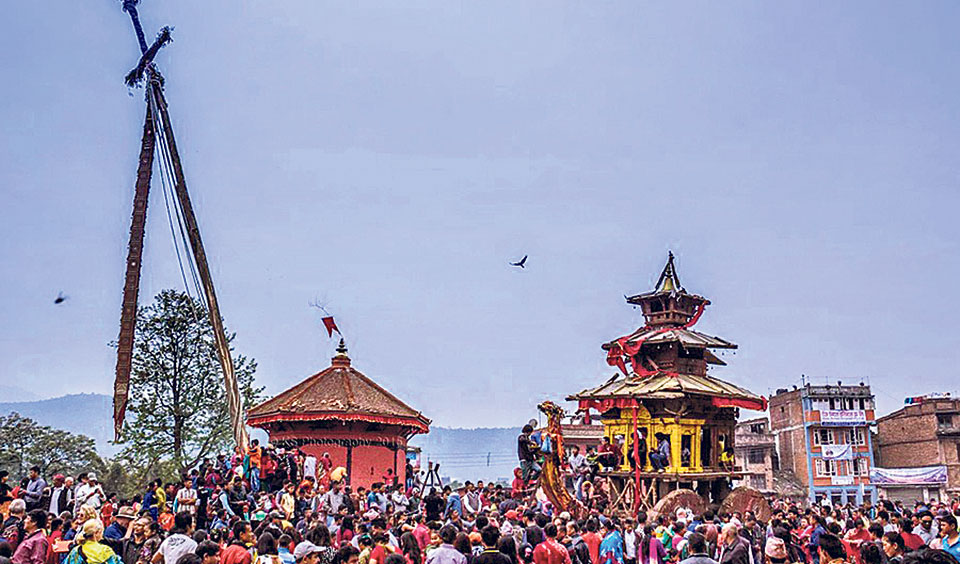
The festival transforms Kathmandu’s Durbar Square and surrounding areas into a stage of chariot processions, masked dances, and ancient rituals. It is also the only time of year when the Kumari, Nepal’s living goddess, appears in public to bless the city.
The Story Behind Indra Jatra
The festival commemorates a legend about Indra, the king of the gods. According to the myth:
- Indra’s mother needed a special flower, the parijat, which grew only in Kathmandu.
- Indra came down to Earth to fetch it, disguised as a commoner.
- He was caught by the people of Kathmandu, who tied him up in the middle of the city.
- When his mother came looking for him, she revealed his identity, and the people released him with great honor.
- The festival celebrates Indra’s visit and his mother’s gratitude.
The festival also honors Bhairav, the fierce form of Shiva, and marks the end of the monsoon season.
The Eight Days of Indra Jatra
Indra Jatra lasts eight days, with each day featuring specific rituals.
Day 1 — Yosin Thanegu
The festival begins with the erection of a tall wooden pole called Yosin in front of the Hanuman Dhoka Palace in Kathmandu Durbar Square. The pole is decorated with banners and is a central symbol of the festival.
Day 2 — Chariot Processions Begin
Two large wooden chariots, one for Kumari and one for Ganesh, are pulled through the streets of Kathmandu. This is the first public appearance of the Kumari, who is worshipped as a living goddess.
Day 3 — Kumari Jatra
The chariot procession continues, and the Kumari blesses the city from her chariot. A third chariot, for Bhairav, joins the procession.
Day 4 — Full Procession
The grandest chariot procession of the festival, with all three chariots (Kumari, Ganesh, and Bhairav) moving through the city’s main streets.
Day 5–7 — Masked Dances
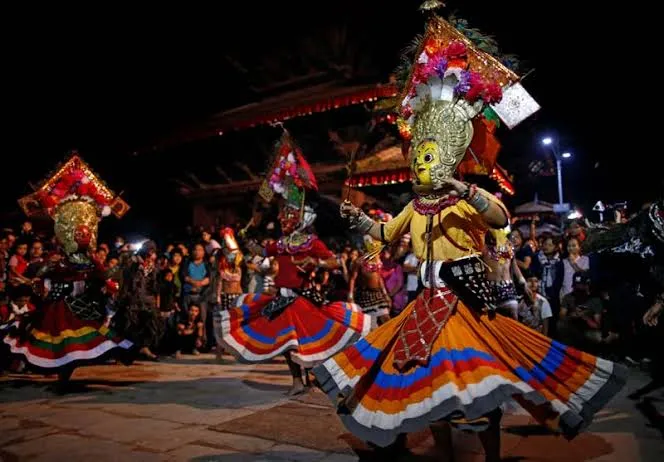
Various masked dances are performed, including the Lakhe dance (by demons) and Mahakali dance. The dancers visit shrines and important locations throughout the valley.
Day 8 — Yosin Thanegu (Pole Lowering)
The festival ends with the lowering of the Yosin pole at Hanuman Dhoka. This marks the formal conclusion of Indra Jatra.
The Kumari: Nepal’s Living Goddess
The Kumari is a young girl worshipped as the living incarnation of the goddess Taleju. She is selected from the Shakya caste of Newar Buddhists in Kathmandu and must meet 32 strict physical requirements.
During Indra Jatra, the Kumari is carried in a golden chariot through the streets of Kathmandu, blessing the city and its people. Her appearance is the highlight of the festival.
When the Kumari reaches puberty, she retires, and a new Kumari is selected.
Pulu Kisi and Other Rituals
In addition to the chariots and dances, Indra Jatra features several unique rituals:
- Pulu Kisi: A dance representing a white elephant searching for Indra. The elephant is made of cloth and bamboo, and dancers move through the streets.
- Sawa Bhakku: A dance performed by two men tied together, representing Bhairav and his consort.
- Bhairav Dance: A masked dance depicting the fierce form of Shiva.
Indra Jatra in Modern Nepal
Indra Jatra remains a major event in Kathmandu, drawing thousands of spectators each year. It is one of the few festivals where the President of Nepal traditionally attends and offers worship at Hanuman Dhoka.
The festival is also a major tourist attraction. Visitors come to see the chariot processions, the masked dances, and the appearance of the Kumari.
Frequently Asked Questions
What is Indra Jatra?
Indra Jatra is an eight-day Newar festival in Kathmandu honoring Indra, the god of rain. It features chariot processions, masked dances, and the public appearance of the Kumari, Nepal’s living goddess.
When is Indra Jatra celebrated?
Indra Jatra is celebrated in September, ending on the full moon day of the Hindu month of Bhadra. It lasts eight days.
Who is the Kumari?
The Kumari is a young Newar girl worshipped as the living incarnation of the goddess Taleju. She appears in public during Indra Jatra and blesses the city of Kathmandu.
Why is Indra Jatra important in Nepal?
It is the biggest Newar festival in the Kathmandu Valley, honoring Indra and celebrating the end of the monsoon. It is also the only time the Kumari appears publicly.
Read next: Bisket Jatra: Bhaktapur’s New Year Festival — Nepal’s most dramatic chariot festival, celebrated in Bhaktapur.
Related districts: Kathmandu, Lalitpur, Bhaktapur, Kavrepalanchok, Nuwakot