Chhath (छठ) is one of the most ancient and rigorous festivals in Nepal. Dedicated to Surya, the Sun God, it is celebrated over four days, mainly in the Terai region of southern Nepal and in the Indian states of Bihar and Uttar Pradesh. It falls shortly after Tihar, usually in October or November.
Unlike most Hindu festivals, Chhath involves no idol worship. Instead, devotees offer prayers directly to the setting and rising sun while standing in rivers, ponds, or other water bodies. The festival is known for its strict fasting, physical endurance, and deep spiritual devotion.
The Story Behind Chhath
Chhath has multiple origin stories in Hindu tradition. The most common ones involve:
- Surya, the Sun God, and his wife Usha (the dawn), and Pratyusha (the dusk)
- Chhathi Maiya, a mother goddess believed to protect children
- Karna, the legendary warrior of the Mahabharata, who was a devoted worshipper of the Sun
The festival is fundamentally about gratitude to the Sun for sustaining life on Earth, and about asking for the well-being of one’s family, especially children.
The Four Days of Chhath
Chhath is a four-day festival, each day with a specific ritual.
Day 1 — Nahay Khay
Devotees cleanse themselves in rivers or ponds, then eat a single pure meal of rice, dal, and bottle gourd (lauki). The food must be cooked without onion, garlic, or any impure ingredients.
Day 2 — Kharna
A day of fasting from sunrise to sunset. In the evening, devotees break their fast with kheer (rice pudding), roti, and bananas. This meal is shared with family and then the 36-hour strict fast begins.
Day 3 — Sandhya Arghya (Evening Offering)
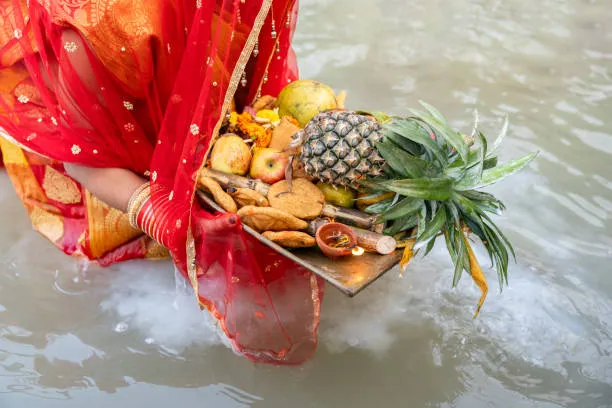
The most important day. Devotees, dressed in new clothes, gather at the banks of rivers or ponds at sunset. They stand in the water, offer arghya (a mixture of water, milk, and flowers) to the setting sun, and pray. The scene is spectacular — thousands of people standing in water, holding bamboo baskets of offerings, facing the sun.
Day 4 — Usha Arghya (Morning Offering)
Before sunrise, devotees return to the water to offer prayers to the rising sun. This marks the end of the fast. After the offering, they break their fast with prasad and distribute sweets to family and neighbors.
Rituals and Offerings
The Chhath ritual is defined by its strict rules and specific offerings:
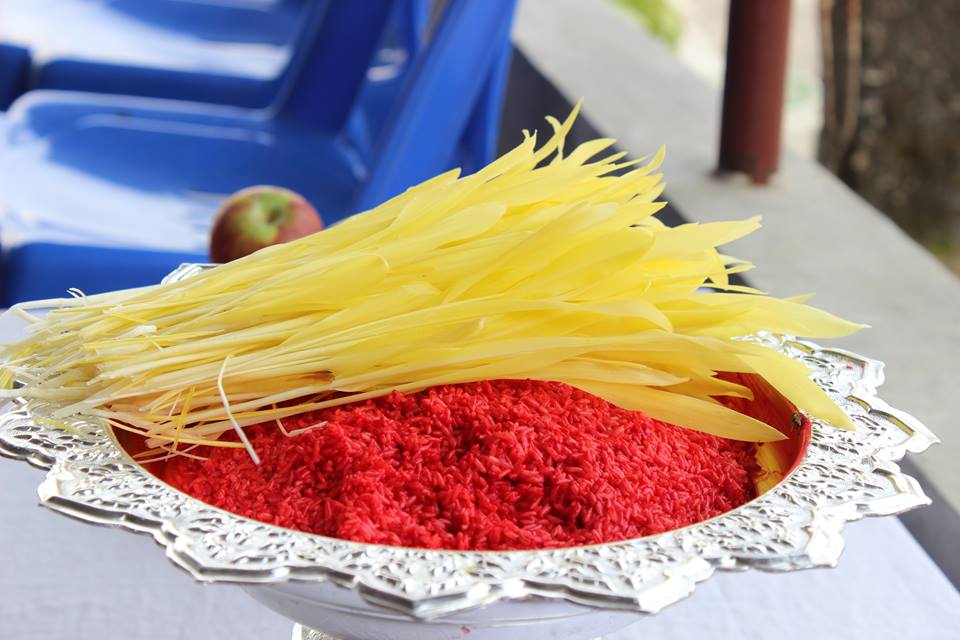
- Thekua: A special dry sweet made of wheat flour, ghee, and sugar, which is the signature Chhath prasad.
- Sugarcane: Whole sugarcane stalks are offered as a symbol of sweetness and prosperity.
- Fruits: Bananas, coconuts, and other seasonal fruits are placed in bamboo baskets called daura and soop.
- Diya (lamps): Clay lamps are lit and placed inside the baskets and floated on the water.
Fasting: Devotees fast for 36 hours without food or water. This is one of the most difficult fasts in Hindu tradition, and it requires strong physical and mental discipline.
Who Celebrates Chhath
Chhath is celebrated primarily by:
- Maithili and Bhojpuri communities of the Terai
- Madhesi communities across southern Nepal
- Hindu communities in the Indian states of Bihar, Jharkhand, and Uttar Pradesh
- Nepali and Indian diaspora around the world, especially in Mauritius, Fiji, and the United States
In recent years, Chhath has gained popularity outside its traditional strongholds, with celebrations now held in Kathmandu and Pokhara as well.
Chhath in Nepal vs India
While Chhath is celebrated in both Nepal and India, there are subtle differences:
- Nepal: Chhath is a public holiday in the Terai districts and increasingly in the Kathmandu Valley. The festival is celebrated by both Maithili and Bhojpuri communities, each with their own songs and traditions.
- India: Chhath is a major festival in Bihar, Jharkhand, and eastern Uttar Pradesh, and is a public holiday in those states.
Cultural Significance
Chhath is more than a religious event. It is a celebration of:
- Nature: The Sun, water, and earth are all worshipped
- Women’s devotion: Chhath is led primarily by women, who undertake the fast on behalf of their families
- Community: The riverbank gatherings bring together entire neighborhoods
- Heritage: For Terai communities, Chhath is a defining cultural marker
Frequently Asked Questions
What is Chhath festival?
Chhath is a four-day Hindu festival dedicated to the Sun God, celebrated mainly in Nepal’s Terai region and in Bihar, India. It involves fasting, offerings to the setting and rising sun, and gathering at rivers and ponds.
When is Chhath celebrated?
Chhath falls shortly after Tihar, usually in October or November, on the sixth day of the Hindu month of Kartik.
Why is Chhath celebrated?
It is celebrated to thank the Sun God for sustaining life and to ask for the well-being of family, especially children. The festival has multiple origin stories, including the legend of Karna from the Mahabharata.
How long is the Chhath fast?
Devotees fast for 36 hours without food or water, from the evening of Kharna to the morning after Usha Arghya.
Read next: Holi: The Festival of Colors — Spring arrives in Nepal with a joyful explosion of color.
Related districts: Dhanusha, Mahottari, Sarlahi, Bara, Parsa