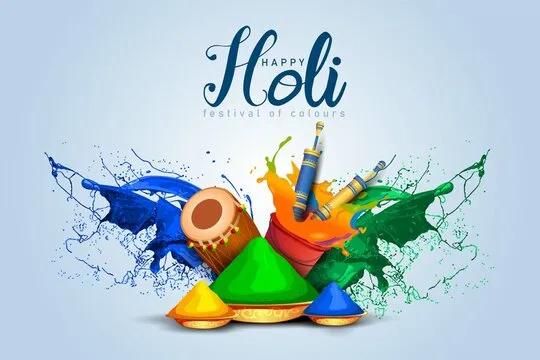
Holi (होली), the Festival of Colors, is one of the most joyful celebrations in Nepal. It marks the arrival of spring and the triumph of good over evil. Celebrated in February or March, Holi is a two-day festival filled with colored powder, water, music, and laughter.
Unlike many Nepalese festivals that focus on family and ritual, Holi is a public celebration. Streets fill with people throwing colors, strangers become friends, and social barriers temporarily dissolve.
The Story Behind Holi
Holi has its roots in Hindu mythology, with two main stories:
- Holika and Prahlad: The demon king Hiranyakashipu tried to kill his son Prahlad, a devotee of Vishnu. He asked his sister Holika, who was immune to fire, to sit in a bonfire with Prahlad. But the fire burned Holika and left Prahlad unharmed. The festival celebrates the victory of devotion over evil.
- Radha and Krishna: Holi is also associated with the divine love of Radha and Krishna, who played with colors in the fields of Vrindavan.
The bonfire that burns on the eve of Holi — called Holika Dahan — reenacts the burning of Holika.
Two Days of Holi in Nepal
Nepal celebrates Holi over two days, unlike most of India where it is a one-day event. The difference exists because of Nepal’s geography — the hills and mountains celebrate on one day, and the Terai on another.
Day 1 — Holi in the Hills
The first day of Holi is celebrated in the hilly regions, including the Kathmandu Valley. This is the main celebration for most foreigners and urban Nepalese.
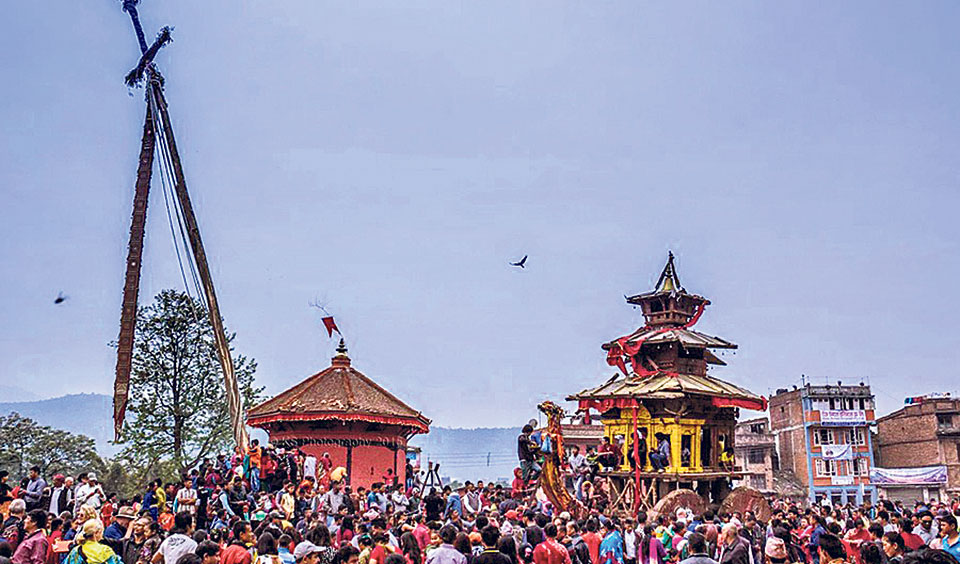
The day begins with Chir Haran, a ceremonial pole erected in Basantapur Durbar Square the night before, which is then torn down as part of Holi. People gather in the streets, throw colored powder (called abir) and water at each other, and dance to music.
Day 2 — Holi in the Terai
The second day is celebrated in the Terai region, including Janakpur, Birgunj, and other southern cities. It is also called Fagu Purnima. The celebrations are similar but often more subdued and family-focused.
How Holi Is Celebrated in Nepal
Holi in Nepal is a sensory explosion:
- Colors: People throw colored powder and water balloons. Every color has meaning — red for love, green for nature, yellow for knowledge.
- Music: Loud speakers blast Bollywood songs and traditional Holi music.
- Water: Water guns, buckets, and balloons are used to drench everyone in sight.
- Food and drink: Special sweets like gujiya and drinks like thandai are prepared.
In Kathmandu, Basantapur Durbar Square and the streets of Thamel are the biggest Holi hotspots. In Pokhara, Lakeside fills with celebrants.
Chir Haran: A Unique Kathmandu Ritual
In the Kathmandu Valley, Holi begins with a unique ritual called Chir Haran. A tall bamboo pole decorated with colorful cloth is erected at Basantapur Durbar Square on the night before Holi. The pole represents the mythological tree that Krishna and Radha played beneath.
On Holi day, the pole is torn down in a public ceremony, and the celebrations officially begin.
Regional Variations
Nepal’s Holi is celebrated differently across the country:
- Kathmandu Valley: The biggest urban celebration, with Chir Haran and mass street parties.
- Terai: More traditional and family-focused, with less public color-throwing.
- Himalayan regions: Sherpa and Tibetan communities often celebrate Holi alongside their own festivals.
- Newar community: Holi is also celebrated as part of the Newar festival calendar.
Holi and Modern Nepal
Holi has become increasingly commercialized and popular in urban areas. It is now a major tourist attraction, drawing visitors from around the world who come to Kathmandu to experience the festival.
At the same time, there are growing concerns about:
- Safety: Water balloons and harassment of women in public spaces.
- Environment: Chemical colors that harm skin and the environment.
- Alcohol: Public drinking is common during Holi and can lead to disorder.
Some neighborhoods now promote organic colors and safer celebrations.
Frequently Asked Questions
What is Holi?
Holi is Nepal’s Festival of Colors, celebrating the arrival of spring and the victory of good over evil. It falls in February or March and is marked by colored powder, water, music, and public celebration.
When is Holi celebrated in Nepal?
Holi is celebrated in February or March, on the full moon day of the Hindu month of Falgun. In Nepal, it spans two days — the hills celebrate on the first day, the Terai on the second.
Why is Holi celebrated for two days in Nepal?
Nepal celebrates Holi over two days because of its geography. The hilly regions (including Kathmandu) celebrate on the first day, and the Terai region celebrates on the second.
What is Chir Haran?
Chir Haran is a Kathmandu Valley ritual that marks the start of Holi. A bamboo pole is erected at Basantapur Durbar Square and torn down in a public ceremony on Holi day.
Read next: Buddha Jayanti: Celebrating the Birth of the Buddha — Nepal’s most important Buddhist festival.
Related districts: Kathmandu, Lalitpur, Bhaktapur, Dhanusha, Parsa