Yomari (योमरी) is one of the most beloved sweets of Newar cuisine — a steamed rice-flour dumpling filled with chaku (molasses) and til (sesame). It is the signature food of Yomari Punhi, a Newar festival celebrated on the full moon day of December, marking the end of the rice harvest.
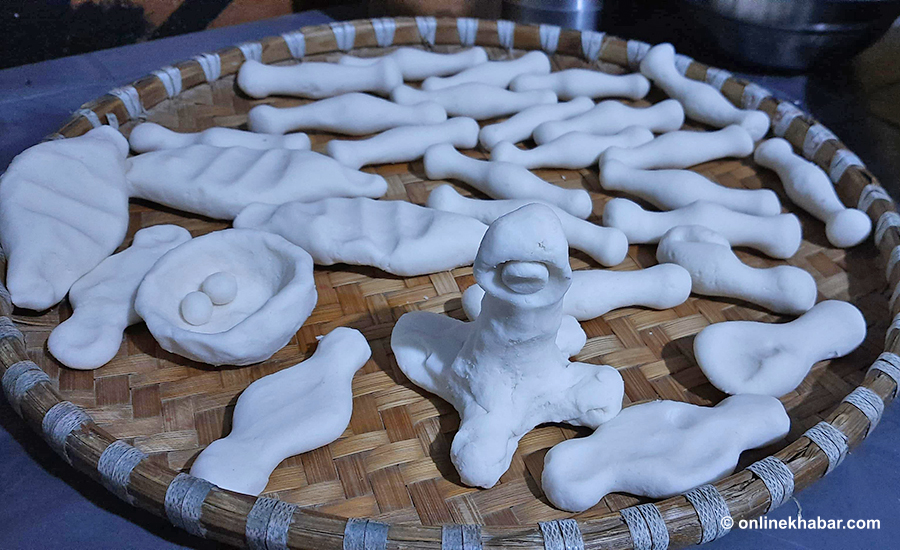
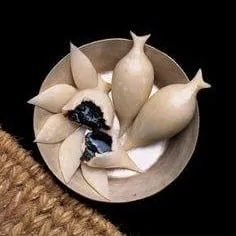
Yomari is a delicate, sweet, and slightly chewy dumpling, shaped like a fig or a small pouch. Its name comes from two Newari words: ya (to like) and mari (delicacy) — literally “the delicacy that everyone likes.”
What Is Yomari?
Yomari is made from rice flour dough, shaped into a small pouch or fig shape, and filled with a sweet mixture of:
- Chaku (molasses): Dark, thick, and rich
- Til (sesame seeds): Roasted and ground
- Sometimes: Ghee, coconut, or cardamom
Once filled, the Yomari is sealed, traditionally with a decorative pattern of small ridges along the top, and steamed until cooked. The result is a soft, sweet, warm dumpling.
The Legend Behind Yomari
Yomari has a charming origin story. According to Newar legend:
A married couple named Suchandra and Krita lived in Panauti, a town in the Kathmandu Valley. They had no children, so they prayed to the gods and performed a special ritual with rice flour, molasses, and sesame seeds. They shaped the mixture into small dumplings as an offering.
The gods were pleased, and the couple was blessed with a child. The dumplings they had made — Yomari — became the sacred food of the new festival, Yomari Punhi.
The story is a reminder that Yomari is not just a sweet — it is a food of blessing and abundance.
Yomari Punhi: The Festival
Yomari Punhi (योमरी पुन्हि) is celebrated on the full moon day of the Newar month of Thinla, usually in December. The festival marks:
- The end of the rice harvest
- The beginning of winter
- A celebration of the year’s abundance
On this day, Newar families make Yomari in large batches, offer them to the gods, and share them with neighbors and relatives. Children go door to door asking for Yomari, much like Halloween.
How Yomari Is Made
Making Yomari takes skill. The traditional method:
- Prepare the dough: Rice flour is mixed with warm water to form a soft dough.
- Make the filling: Chaku is melted, mixed with roasted sesame seeds, and sometimes ghee or cardamom.
- Shape the Yomari: A small ball of dough is flattened into a cup shape.
- Fill and seal: A spoonful of filling is placed inside, and the dough is pinched shut at the top.
- Decorate: The top is marked with a pattern of small ridges using a small tool.
- Steam: The Yomari are placed in a steamer and cooked until tender.
Yomari are eaten warm, straight from the steamer, or at room temperature.
Varieties of Yomari
While the classic Yomari is filled with chaku and til, there are variations:
- Khowa Yomari: Filled with khowa (milk solids) and sugar
- Khuwa Yomari: Filled with coconut and sugar
- Chaku Yomari: The traditional and most common version
- Modern variations: Chocolate, dates, or nut fillings
Where to Try Yomari
Yomari is easiest to find during Yomari Punhi (December), when Newar households and sweet shops make them fresh. Outside festival time:
- Newari restaurants in Kathmandu, Patan, and Bhaktapur
- Traditional sweet shops in the Kathmandu Valley
- Newar family kitchens — if you’re lucky to be invited
Yomari is not commonly sold in regular Nepali restaurants, so festival time is the best opportunity to try authentic Yomari.
Frequently Asked Questions
What is Yomari?
Yomari is a steamed rice-flour dumpling filled with molasses (chaku) and sesame (til). It is the signature sweet of the Newar festival Yomari Punhi.
When is Yomari eaten?
Yomari is traditionally eaten during Yomari Punhi, a Newar festival celebrated on the December full moon. It can also be found in Newari restaurants year-round.
What is Yomari filled with?
Traditional Yomari is filled with chaku (molasses) and til (sesame seeds). Modern variations include khowa, coconut, chocolate, or nuts.
What is the story behind Yomari?
According to Newar legend, Yomari was created by a couple named Suchandra and Krita, who made the dumplings as an offering to the gods and were blessed with a child.
Read next: Kwati: The Nine-Bean Soup of Janai Purnima — Nepal’s most nutritious traditional soup, made from nine sprouted beans.
Related districts: Kathmandu, Lalitpur, Bhaktapur, Kavrepalanchok, Makwanpur