Bagiya (बगिया) is the signature dish of the Tharu community, the indigenous people of Nepal’s Terai region. It is a steamed rice-flour dumpling, filled with either sweet molasses or savory spiced lentils and vegetables. In eastern Tharu communities it’s called Bagiya, while in western Tharu areas it’s known as Dhikri.
Bagiya is more than just a food — it is a symbol of Tharu civilization and identity. For the Tharu people, Bagiya represents their agricultural heritage, their relationship with rice, and their distinct cultural traditions within the diverse tapestry of Nepal.
What Is Bagiya?
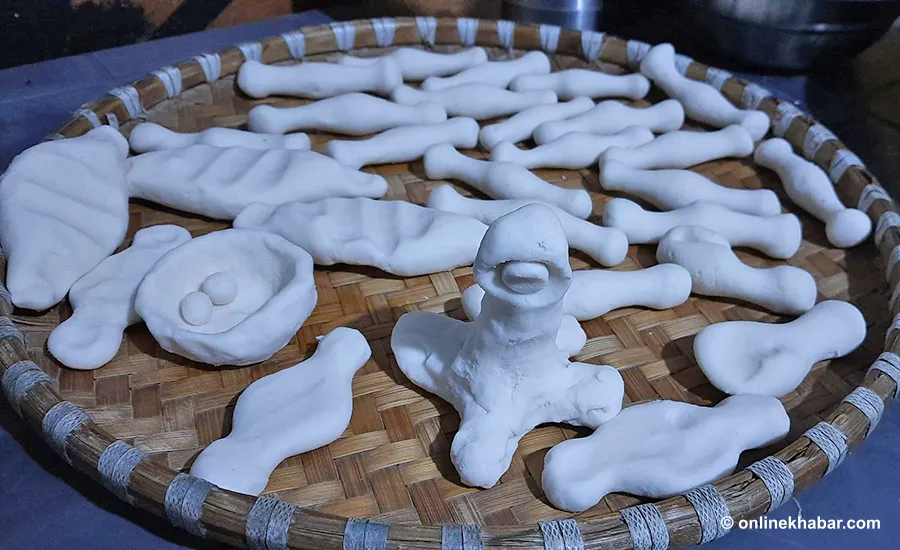
Bagiya is made from rice flour — a staple of the Tharu diet, since the Tharu have traditionally been the primary rice farmers of the Terai. The dough is shaped into small balls, filled with either sweet or savory stuffing, and steamed until cooked.
The result is a soft, slightly chewy dumpling with a tender exterior and a rich, flavorful filling. Bagiya is typically served with a green chutney or a spicy tomato achar.
Types of Bagiya
The Tharu community makes several distinct varieties:
| Type | Description |
|---|---|
| Pani Bagiya | Simple rice-flour dumplings, boiled in water |
| Daail Bagiya | Stuffed with spiced lentils |
| Khajan Chirai | Shaped like small birds, made for children |
| Sakhari-Bakhari | Symbolic shapes representing grain storage and prosperity |
The savory version (often called daail bagiya) is stuffed with spiced potatoes, lentils, onion, garlic, ginger, chili, coriander, cumin, and garam masala. The sweet version is filled with chaku (molasses) and til (sesame).
The Cultural Significance of Bagiya
Tihar (Shukrarai) — The Most Important Occasion
The Tharu community celebrates Tihar as Shukrarai or Sukh Rat (the “night of happiness”). After welcoming the goddess Laxmi into their homes, families wake up the next morning and begin making Bagiya — house by house, throughout the neighborhood.
During Tihar, when groups go door-to-door singing Deusi, the Tharu traditionally give Bagiya as the gift — not money. This is one of the oldest traditions of the Tharu community. As one Tharu cultural expert explains, “Before money existed, Bagiya was the reward.”
Laxmi Puja
On Laxmi Puja — the most important night of Tihar — Bagiya has special significance in Tharu households. It is prepared as an offering to the goddess and shared with family members after the puja.
Other Occasions
Bagiya is also prepared during:
- Maghi — the Tharu New Year
- Dashain — the 15-day autumn festival
- Weddings and ceremonies
- Any auspicious family event
Why Bagiya Is a Symbol of Tharu Identity
For the Tharu, Bagiya is not just food — it is a marker of who they are. As Tharu culturalist Bhulai Chaudhary puts it:
“If Bagiya is lost, Tharu civilization is lost. It is our originality.”
The dish reflects the Tharu’s historical role as rice farmers of the Terai, and their relationship with the land. The very word bagiya means “food cooked by steam” — a technique passed down through generations.
How Bagiya Is Made
The traditional Tharu preparation:
Ingredients
- Outer layer: Rice flour, water, salt
- Savory filling: Boiled potatoes, lentils, onion, garlic, ginger, chili, coriander, cumin, garam masala
- Sweet filling: Chaku (molasses), til (sesame)
Method
- Mix rice flour with water to form a soft dough
- Roll into small balls and hollow out the center
- Prepare the filling (spiced potato-lentil mix or chaku-til)
- Fill the dough balls and shape them into ovals or rounds
- Steam in a traditional steamer until cooked
- Cool briefly in cold water
- Serve with green chutney or tomato achar
Health Benefits of Bagiya
Bagiya is considered a healthy food because it is:
- Oil-free — no frying is involved
- Steamed — preserves nutrients
- Low in fat — suitable for all ages
- Rice-based — easily digestible
It is especially recommended for people with diabetes, high blood pressure, and anyone seeking a light, nutritious meal.
Bagiya Today
In recent years, Tharu traditional cuisine and lifestyle have been under pressure from modernization. But Bagiya has retained its cultural importance. Tharu villages that host homestay tourism now offer Bagiya to visitors, introducing the dish to a wider audience.
In Kathmandu and other cities, Tharu restaurants and cultural events occasionally feature Bagiya, but the most authentic experience remains in the Terai villages where it has been made for centuries.
Frequently Asked Questions
What is Bagiya?
Bagiya is a steamed rice-flour dumpling from the Tharu community of Nepal’s Terai. It is filled with either sweet molasses or savory spiced lentils and vegetables, and it is a cultural icon of the Tharu people.
When is Bagiya made?
Bagiya is especially made during Tihar (Shukrarai), Laxmi Puja, Maghi, Dashain, weddings, and other auspicious occasions in the Tharu community.
What is the difference between Bagiya and Dhikri?
They are the same dish — eastern Tharu communities call it Bagiya, while western Tharu communities call it Dhikri.
Is Bagiya healthy?
Yes. Bagiya is oil-free, steamed, low in fat, and rice-based, making it easily digestible and suitable for all ages, including people with diabetes or high blood pressure.
Read next: Dal Bhat: The Heart of Nepali Cuisine — Nepal’s national meal that fuels the nation twice a day.