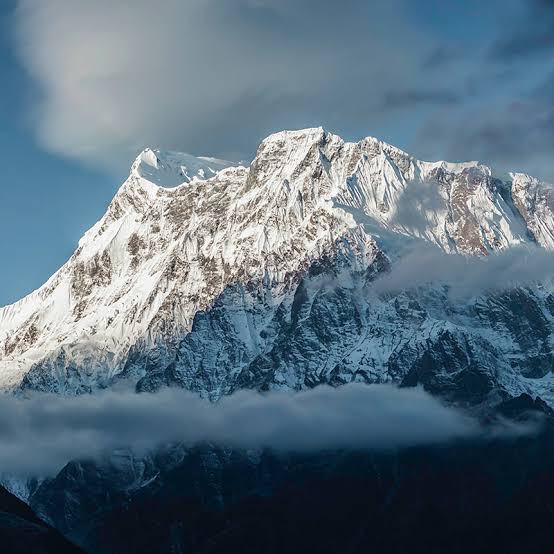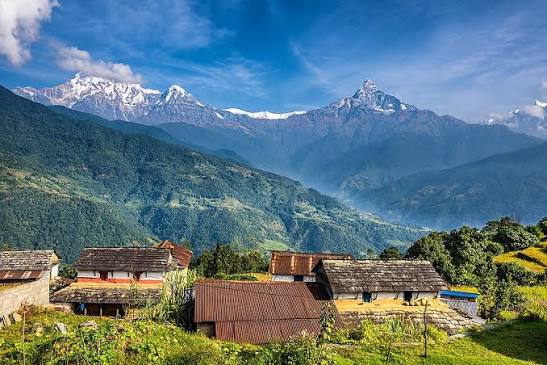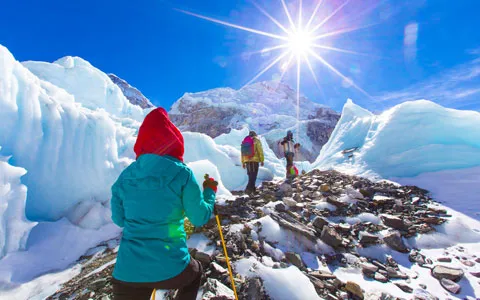
Nepal is the trekking capital of the world. With eight of the world’s fourteen 8,000-meter peaks, hundreds of trails, and a well-developed teahouse network, Nepal offers trekking for every level — from a 3-day walk near Kathmandu to a 21-day expedition to Everest Base Camp.
This guide compares all the major treks — duration, difficulty, cost, best time, and who each trek is for — so you can choose the right one.
The Big Three Treks
1. Everest Base Camp (EBC)
Duration: 12–14 days from Lukla to Lukla.
Difficulty: Challenging. Altitude is the main challenge (Kala Patthar at 5,545 m).
Best time: October–November, March–May.
Cost: $1,200–2,000 (Lukla to Lukla, excluding flights).
Highlights: Everest views, Sherpa culture, Kala Patthar, Tengboche Monastery.
Best for: Fit trekkers who want the world’s most famous trek.
Full guide: Everest Base Camp Trek.
2. Annapurna Circuit
Duration: 12–16 days from Besisahar to Pokhara.
Difficulty: Moderate. Thorong La (5,416 m) is the main challenge.
Best time: October–November, March–April.
Cost: $600–900 (budget), $1,000–1,500 (mid-range).
Highlights: Thorong La, Muktinath, Kali Gandaki Gorge, Thakali culture.
Best for: Trekkers who want ecological and cultural diversity in one trek.
Full guide: Annapurna Circuit Trek.
3. Annapurna Base Camp (ABC)
Duration: 10–12 days from Pokhara to Pokhara.
Difficulty: Moderate. Altitude to 4,130 m.
Best time: October–November, March–April.
Cost: $700–1,200.
Highlights: Annapurna Sanctuary, Machhapuchhre views, Gurung villages.
Best for: Trekkers who want a shorter alternative to EBC, with equally dramatic mountain views.
Other Major Treks
Langtang Valley
Duration: 7–10 days.
Difficulty: Easy-moderate.
Best time: October–November, March–May.
Cost: $500–900.
Highlights: Langtang Lirung views, Tamang culture, Kyanjin Gompa.
Best for: Trekkers with limited time who want to see the Himalayas.
Manaslu Circuit
Duration: 14–18 days.
Difficulty: Challenging. Crosses Larkya La (5,106 m).
Best time: October–November, March–April.
Cost: $1,200–1,800.
Highlights: Remote trails, Tibetan culture, Larkya La.
Best for: Trekkers who want a less-crowded, more authentic experience.
Note: Restricted area — requires a licensed guide and minimum 2 trekkers.
Poon Hill (Ghorepani)
Duration: 4–5 days.
Difficulty: Easy.
Best time: Year-round (best October–November, March–April).
Cost: $300–600.
Highlights: Sunrise over Annapurna and Dhaulagiri, rhododendron forests, easy access from Pokhara.
Best for: Beginners, families, and short treks.
Mardi Himal
Duration: 5–7 days.
Difficulty: Moderate.
Best time: October–November, March–April.
Cost: $500–800.
Highlights: Less-crowded alternative to ABC, stunning Machhapuchhre views.
Best for: Trekkers who want a quieter, shorter trek.
Upper Mustang
Duration: 10–14 days.
Difficulty: Moderate. High altitude (up to 4,200 m) but no technical pass.
Best time: June–August (rain shadow — the only time Upper Mustang is accessible).
Cost: $1,500–2,500 (including $500 permit).
Highlights: Tibetan plateau, ancient monasteries, Lo Manthang.
Best for: Trekkers who want something completely different from the green valleys.
Note: Restricted area — requires a licensed guide and minimum 2 trekkers.
Upper Dolpo
Duration: 18–24 days.
Difficulty: Challenging. Remote, high altitude.
Best time: June–September.
Cost: $2,500–4,000 (including $500 permit).
Highlights: Nepal’s most remote region, Tibetan culture, Phoksundo Lake.
Best for: Experienced trekkers who want true wilderness.
Note: Restricted area — requires a licensed guide.
Kanchenjunga Base Camp
Duration: 20–25 days.
Difficulty: Challenging. Remote, high altitude.
Best time: October–November, March–May.
Cost: $2,000–3,500.
Highlights: Third-highest mountain in the world, remote eastern Nepal.
Best for: Experienced trekkers looking for wild, unspoiled trails.
Comparison Table
| Trek | Days | Difficulty | Best Time | Budget | Crowd Level |
|---|---|---|---|---|---|
| Poon Hill | 4–5 | Easy | Year-round | $300–600 | High |
| Mardi Himal | 5–7 | Moderate | Oct–Nov, Mar–Apr | $500–800 | Medium |
| Langtang Valley | 7–10 | Easy-moderate | Oct–Nov, Mar–May | $500–900 | Medium |
| Annapurna Base Camp | 10–12 | Moderate | Oct–Nov, Mar–Apr | $700–1,200 | High |
| Everest Base Camp | 12–14 | Challenging | Oct–Nov, Mar–May | $1,200–2,000 | Very High |
| Annapurna Circuit | 12–16 | Moderate | Oct–Nov, Mar–Apr | $600–1,500 | High |
| Manaslu Circuit | 14–18 | Challenging | Oct–Nov, Mar–Apr | $1,200–1,800 | Low |
| Upper Mustang | 10–14 | Moderate | Jun–Aug | $1,500–2,500 | Low |
| Upper Dolpo | 18–24 | Challenging | Jun–Sep | $2,500–4,000 | Very Low |
| Kanchenjunga | 20–25 | Challenging | Oct–Nov, Mar–May | $2,000–3,500 | Very Low |
Choosing the Right Trek
If you’re a beginner: Poon Hill, Langtang Valley, or Mardi Himal.
If you want the iconic trek: Everest Base Camp.
If you want diversity: Annapurna Circuit.
If you want remoteness: Manaslu, Upper Mustang, or Upper Dolpo.
If you have limited time: Poon Hill or Mardi Himal.
If you want high altitude without technical challenges: EBC or Annapurna Circuit.
If you want cultural immersion: Upper Mustang, Manaslu, or Kanchenjunga.
Packing Essentials (All Treks)
- Down jacket (rated -10°C to -20°C depending on trek)
- Sleeping bag (rated -10°C)
- Waterproof shell (jacket and pants)
- Trekking boots (broken in)
- Trekking poles
- Headlamp, batteries, power bank
- Water purification tablets or filter
- Sunscreen, sunglasses, lip balm
- First aid kit, Diamox, ibuprofen
- Snacks (energy bars, nuts, chocolate)
- Warm layers (fleece, thermals)
- Cash (ATMs are scarce on trail)
Fitness Preparation
3 months before:
- Start cardio training (running, cycling, hiking).
- Do 2–3 long hikes per week (4–6 hours).
1 month before:
- Increase cardio to 4–5 sessions/week.
- Do weekend hikes with a pack (10–15 kg).
1 week before:
- Taper activity — avoid injury.
- Get plenty of rest.
Altitude Sickness
Golden rules:
- Climb high, sleep low.
- Ascend no more than 500 m/day above 3,000 m.
- Take acclimatization days (EBC: Namche, Dingboche; Annapurna: Manang).
- Drink 3–4 liters of water daily.
- Avoid alcohol and smoking above 3,000 m.
- Carry Diamox (consult doctor).
- Know symptoms (headache, nausea, dizziness, breathlessness). If worsening, descend immediately.
Insurance
Travel insurance is mandatory for trekking in Nepal. Ensure your policy covers:
- Helicopter evacuation (up to $10,000)
- High-altitude trekking (above 4,000 m)
- Medical expenses
- Trip cancellation
Nepali trekking agencies require proof of insurance before permits.
Booking a Trek
Option 1 — Independent trekking:
- You arrange permits, transport, and lodges yourself.
- Cheapest, most flexible.
- Need good planning and navigation skills.
Option 2 — Porter only:
- Hire a porter to carry your pack.
- $20–25/day.
- You plan the route.
Option 3 — Guide only:
- Hire a licensed guide.
- $25–35/day.
- They plan the route, arrange permits, and help with logistics.
Option 4 — Full package:
- Trekking agency arranges everything.
- $50–80/day (including guide, porter, permits, accommodation, meals).
- Easiest, most expensive.
Frequently Asked Questions
What is the best trek in Nepal for beginners?
Poon Hill (4–5 days) is the most beginner-friendly. Langtang Valley (7–10 days) is also good for first-time trekkers.
What is the hardest trek in Nepal?
Upper Dolpo and Kanchenjunga are the most challenging — remote, high-altitude, and long. Everest Base Camp is the most difficult of the popular treks.
How much does trekking in Nepal cost?
Budget: $500–900 for shorter treks, $1,200–2,000 for EBC. Mid-range: $1,500–3,000. All-inclusive guided packages: $50–100/day.
What is the best time to trek in Nepal?
October–November (post-monsoon) and March–May (pre-monsoon) are the two main trekking seasons. Both offer clear weather and good views.
Read next: Nagarkot & Dhulikhel: Himalayan Views Near Kathmandu — Easy mountain escapes from Kathmandu with panoramic Himalayan views.
Related districts: Solukhumbu, Kaski, Manang, Rasuwa, Mustang