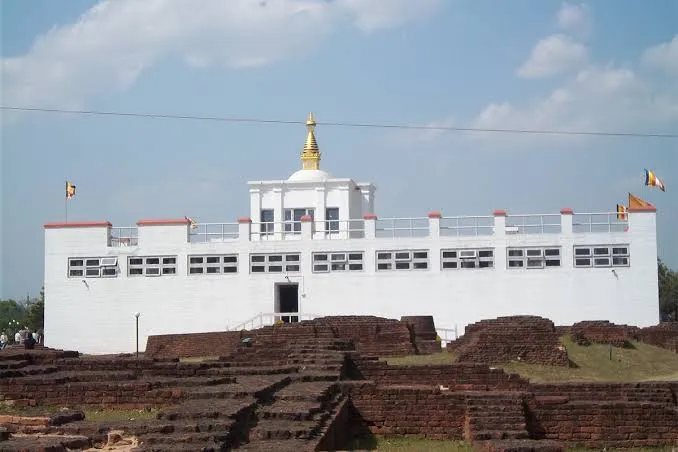
Lumbini is the birthplace of Siddhartha Gautama — the historical Buddha — and one of the holiest sites in Buddhism. Located in the Rupandehi district of Nepal’s Terai region, near the Indian border, it’s a UNESCO World Heritage Site and one of the four most important Buddhist pilgrimage destinations in the world (alongside Bodh Gaya, Sarnath, and Kushinagar).
Every year, hundreds of thousands of pilgrims from around the world — especially from Sri Lanka, Thailand, Myanmar, Japan, and Korea — travel to Lumbini to walk in the footsteps of the Buddha.
Why Visit Lumbini?
- The birthplace of the Buddha: The exact spot is marked by the Maya Devi Temple.
- UNESCO World Heritage Site: Inscribed in 1997.
- International monasteries: Monastic zones built by Buddhist countries from around the world.
- Sacred garden: A peaceful, spiritual environment.
- Ashoka Pillar: Erected by Emperor Ashoka in 249 BCE to mark the birthplace.
- Accessible: 5-hour drive from Kathmandu, 8-hour drive from Pokhara, or 1-hour flight from Kathmandu to Bhairahawa (Gautam Buddha Airport).
What to See in Lumbini
1. Maya Devi Temple
The exact spot where the Buddha was born, according to Buddhist tradition. The temple houses a stone carving depicting the birth, and an ancient brick structure that marks the exact spot. Nearby is the Puskarini Pond, where Maya Devi is said to have bathed before giving birth.
Entry: NPR 500 (foreigners), NPR 200 (SAARC).
2. Ashoka Pillar
Erected by Emperor Ashoka in 249 BCE, the pillar bears an inscription in Brahmi script confirming that this is the birthplace of the Buddha. It is one of the most important archaeological finds in South Asia.
Entry: Free (outside Maya Devi Temple complex).
3. Sacred Garden
A large, peaceful area surrounding the Maya Devi Temple. Monks from various traditions walk, meditate, and chant here. Trees, stupas, and small shrines are scattered throughout.
4. Monastic Zones
Over 40 international monasteries have been built around the Sacred Garden, each reflecting the architectural style of its country:
- Myanmar Golden Temple: The most impressive — a gilded replica of Shwedagon Pagoda.
- Chinese Monastery: A large complex with a Jade Buddha.
- Thai Monastery: Traditional Thai architecture.
- Korean Monastery: Modern Korean-style temple.
- German Monastery: A Theravada monastery with a lotus-shaped structure.
- Sri Lankan Monastery: A large stupa in Sri Lankan style.
You can walk between them for free (though donations are welcome).
5. World Peace Pagoda
A Japanese-built peace pagoda in the monastic zone, with a golden Buddha statue and gardens.
6. Lumbini Museum
A small museum with artifacts, photographs, and information about the Buddha’s life and the history of Lumbini.
Entry: NPR 100.
Getting to Lumbini
By air: 1-hour flight from Kathmandu to Gautam Buddha Airport (Bhairahawa), then 30-minute drive to Lumbini. Flights: NPR 6,000–10,000.
By road:
- From Kathmandu: 8–10 hours by tourist bus (NPR 2,000–3,500) or private car.
- From Pokhara: 6–8 hours by tourist bus (NPR 1,800–2,800).
Best route: Fly from Kathmandu to Bhairahawa, then drive. Saves a full day of travel.
Best Time to Visit Lumbini
- October–March: Best season — cool, dry, comfortable for walking.
- April–May: Hot (up to 40°C), but Buddha Jayanti (Buddha’s birthday, in May) is a major celebration.
- June–August: Monsoon — hot, humid, rainy. Fewer pilgrims.
- December–February: Coolest months, ideal for meditation retreats.
Buddha Jayanti (May full moon) is the biggest festival at Lumbini — thousands of pilgrims and monks gather for celebrations.
Where to Stay in Lumbini
- Lumbini Bazaar: The main tourist area, 3 km from the Sacred Garden. Budget to mid-range hotels. NPR 1,000–4,000/night.
- Inside the Monastic Zone: Several monasteries offer accommodation for pilgrims and visitors. Simple rooms, sometimes free (donations welcome). NPR 500–2,000/night.
- Bhairahawa: Larger hotels (NPR 3,000–10,000/night), for travelers flying in.
Practical Information
- Entry fee: NPR 500 for foreigners (SAARC: NPR 200). Covers the Maya Devi Temple and Sacred Garden.
- Opening hours: 6 AM–6 PM (summer), 6:30 AM–5:30 PM (winter).
- Dress modestly: Cover shoulders and knees. Remove shoes before entering temples.
- Bicycles and electric rickshaws: Available for hire to move between zones (NPR 200–500).
- Vegetarian food: Most restaurants in Lumbini are vegetarian — appropriate for Buddhist pilgrims.
A Note on the Buddha’s Birthplace
Lumbini’s status as the Buddha’s birthplace was confirmed by the Ashoka Pillar inscription (249 BCE) and by the Maya Devi Temple excavations. There is no serious historical debate — this is the birthplace of Siddhartha Gautama.
Frequently Asked Questions
Where is Lumbini?
Lumbini is in the Rupandehi district of Nepal’s Terai region, near the Indian border. It’s about 300 km southwest of Kathmandu.
Why is Lumbini important?
Lumbini is the birthplace of Siddhartha Gautama, the historical Buddha. It’s a UNESCO World Heritage Site and one of the holiest pilgrimage sites in Buddhism.
How do I get to Lumbini?
Fly from Kathmandu to Gautam Buddha Airport (Bhairahawa) — 1 hour — then 30-minute drive to Lumbini. Or drive 8–10 hours by tourist bus.
What is the best time to visit Lumbini?
October–March is the best season — cool, dry, and comfortable. Buddha Jayanti (May full moon) is the biggest festival.
Read next: Nepal Visa & Permits Guide — Everything you need to know about visas, trekking permits, and entry requirements.
Related districts: Rupandehi, Kapilvastu, Nawalparasi, Palpa, Dang