The Kathmandu Valley has one of the highest concentrations of UNESCO World Heritage Sites on Earth. In 1979, seven separate monument zones were inscribed as a single World Heritage property — collectively known as the “Kathmandu Valley” site.
Within a 30-kilometer radius, you can visit ancient palaces, Hindu and Buddhist temples, royal squares, and stupas dating back over 1,500 years. For travelers, this is the single most rewarding destination in Nepal.
The 7 UNESCO Sites
1. Kathmandu Durbar Square
The royal palace complex of the Malla kings of Kantipur (modern Kathmandu). Highlights include:
- Hanuman Dhoka Palace: The historic royal palace, now a museum.
- Kumari Ghar: The residence of Nepal’s living goddess, the Kumari.
- Kasthamandap: A wooden pavilion said to be built from the wood of a single tree.
- Taleju Temple: A 16th-century temple, opened to the public only during Dashain.
- Majudega Temple: A three-tiered Shiva temple.
Location: Central Kathmandu. Entry: NPR 1,000 (SAARC: NPR 250).
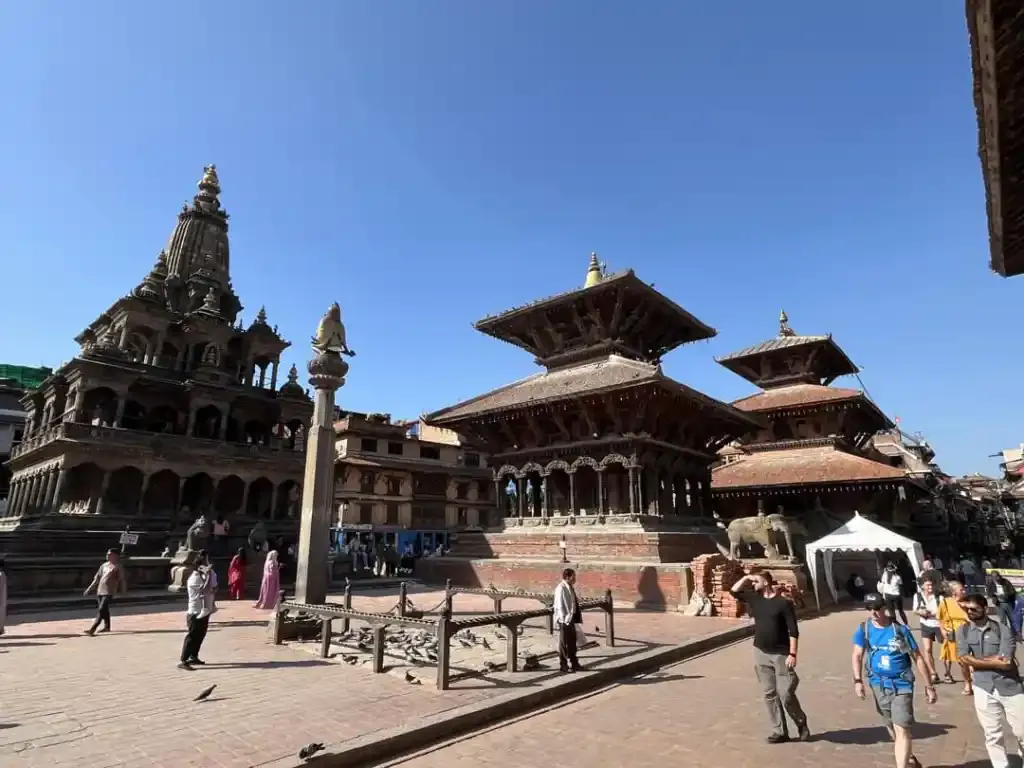
2. Patan Durbar Square
The palace complex of the Malla kings of Lalitpur (Patan). Often considered the most beautiful of the three durbar squares. Highlights include:
- Krishna Mandir: A stunning 17th-century stone temple.
- Golden Temple (Hiranya Varna Mahavihar): A Buddhist monastery.
- Patan Museum: One of the best museums in South Asia.
- Manga Hiti: A 6th-century stone water spout.
Location: Patan (Lalitpur). Entry: NPR 1,000 (SAARC: NPR 250).
3. Bhaktapur Durbar Square
The best-preserved of the three durbar squares — a medieval city in miniature. Highlights include:
- 55 Window Palace: A stunning Malla-era palace.
- Nyatapola Temple: Nepal’s tallest pagoda (5 stories, 30 m).
- Golden Gate: The entrance to the 55 Window Palace.
- Siddha Pokhari: A large 15th-century water tank.
Location: Bhaktapur. Entry: NPR 1,500 (SAARC: NPR 500). Prices include all of Bhaktapur’s heritage zone.
4. Swayambhunath Stupa
The famous “Monkey Temple” — a Buddhist stupa atop a hill west of Kathmandu, with sweeping views of the valley. Highlights include:
- The iconic white dome and gilded spire.
- 365 stone steps leading to the top.
- Tibetan monasteries around the base.
- Hundreds of monkeys (hence the nickname).
Location: West of Kathmandu, 3 km from the center. Entry: NPR 200.
5. Boudhanath Stupa
One of the largest Buddhist stupas in the world — the spiritual heart of Tibetan Buddhism in Nepal. Highlights include:
- The massive white dome with prayer flags.
- Circumambulation (kora) with Tibetan pilgrims.
- Monasteries around the base.
- Butter lamps at sunset.
Location: East of Kathmandu, 6 km from the center. Entry: NPR 400.
6. Pashupatinath Temple
The most sacred Hindu temple in Nepal and one of the most important Shiva temples in the world. Highlights include:
- The main temple (Hindus only).
- Cremation ghats along the Bagmati River.
- Sadhus (Hindu holy men) who frequent the area.
- Evening aarti (fire ritual) at the ghats.
Location: East of Kathmandu, 5 km from the center. Entry: NPR 1,000.
7. Changu Narayan Temple
One of the oldest Hindu temples in the Kathmandu Valley, dating to the 4th century. Highlights include:
- 5th-century stone inscriptions.
- Ancient stone carvings.
- A quiet, less-visited location.
- Panoramic views of the valley.
Location: North of Bhaktapur, 6 km. Entry: NPR 300.
How to Plan Your Visit
Option 1 — Day Trip by Car: Hire a car and driver (NPR 4,000–6,000/day) to visit all 7 sites in one day. This is efficient but rushed.
Option 2 — Three-Day Pass: Buy a multi-day heritage pass (available at the Kathmandu Valley Preservation Trust) and take your time.
Option 3 — Local Transport: Use local buses and taxis to move between sites. Cheaper but slower.
Best time to visit: October–March for clear weather. Avoid Dashain if you want to avoid crowds (though Dashain is culturally fascinating).
Entry Fees Summary
| Site | Foreign (NPR) | SAARC (NPR) |
|---|---|---|
| Kathmandu Durbar Square | 1,000 | 250 |
| Patan Durbar Square | 1,000 | 250 |
| Bhaktapur Durbar Square | 1,500 | 500 |
| Swayambhunath | 200 | 200 |
| Boudhanath | 400 | 400 |
| Pashupatinath | 1,000 | 1,000 |
| Changu Narayan | 300 | 300 |
| Total | 5,400 | 2,900 |
A multi-site pass is available at the Kathmandu Valley Preservation Trust for NPR 1,500 (valid for 7 days for Bhaktapur, Patan, and Kathmandu durbar squares).
Etiquette and Tips
- Dress modestly: Cover shoulders and knees at temples.
- Remove shoes: Before entering temple premises.
- No leather: In Hindu temple inner sanctums.
- Ask before photographing: Especially sadhus and pilgrims.
- Be respectful at cremation ghats: Photography is allowed but keep distance.
- Hire a guide: NPR 2,000–3,000/half-day for context.
Frequently Asked Questions
How many UNESCO sites are in the Kathmandu Valley?
Seven monument zones are inscribed as a single UNESCO World Heritage property: Kathmandu Durbar Square, Patan Durbar Square, Bhaktapur Durbar Square, Swayambhunath, Boudhanath, Pashupatinath, and Changu Narayan.
How long do I need to visit all 7 sites?
3 days is ideal — one day per durbar square, and one day for the stupas and Pashupatinath. In a rush, you can visit all in one long day by car.
What is the entry fee for the UNESCO sites?
Total entry fees are about NPR 5,400 for foreigners (NPR 2,900 for SAARC nationals). A multi-site pass is available for NPR 1,500 (Bhaktapur, Patan, Kathmandu durbar squares only).
Which is the most impressive UNESCO site?
Bhaktapur Durbar Square is the most complete medieval city and the most atmospheric. Patan’s Krishna Mandir is the most beautiful individual temple. Boudhanath and Swayambhunath are the most spiritual.
Read next: Pokhara: Gateway to the Annapurnas — Nepal’s adventure capital, from lakeside tranquility to trekking trails.
Related districts: Kathmandu, Lalitpur, Bhaktapur, Kavrepalanchok, Nuwakot