Chitwan National Park is Nepal’s first national park and its most famous wildlife destination. Established in 1973 as Nepal’s first protected area, it was designated a UNESCO World Heritage Site in 1984. The park covers 952 km² of subtropical jungle, grassland, and riverine forest in the Terai region of south-central Nepal.
Chitwan is famous for one-horned rhinoceros — it hosts one of the largest populations in the world. But the park is also home to Bengal tigers, gharial crocodiles, wild elephants, sloth bears, leopards, and over 500 species of birds.
Why Visit Chitwan?
- Big game sightings: Rhinos, tigers, elephants, and sloth bears.
- Birdwatching: Over 500 species, including the Bengal florican and giant hornbill.
- Canoe trips: On the Rapti and Narayani rivers.
- Jungle walks: Guided walks with experienced naturalists.
- Cultural experience: Tharu villages on the park’s edge.
- Accessibility: 5-hour drive from Kathmandu, 4-hour drive from Pokhara.
Getting to Chitwan
From Kathmandu: 5–6 hours by tourist bus (NPR 1,500–2,500), or 20 minutes by air to Bharatpur (NPR 6,000–8,000).
From Pokhara: 4–5 hours by tourist bus (NPR 1,200–2,000).
Entry: Sauraha is the main tourist village on the park’s northern edge. Kasara is the park headquarters (south).
Best Time to Visit Chitwan
October–March is the best season:
- Dry weather: Good visibility, easier animal spotting.
- Cooler temperatures: 15–25°C, comfortable for outdoor activities.
- Elephant grass is cut: Better wildlife visibility.
- Bird migration: Many species visible.
Avoid:
- Monsoon (June–August): Roads flood, wildlife hides, and leeches are common.
- Late April–May: Very hot (up to 40°C).
What to Do in Chitwan
1. Jeep Safari
The classic Chitwan activity. A jeep safari (4–6 hours) takes you deep into the park in an open 4WD vehicle with a guide. You’ll drive through grassland, forest, and riverbanks, spotting rhinos, deer, monkeys, birds, and — if you’re lucky — a tiger.
Price: NPR 2,500–4,000 per person (shared jeep).
2. Canoe Trip
A traditional dugout canoe trip on the Rapti River is a peaceful way to see crocodiles, birds, and riverside wildlife. Combined with a jungle walk, it’s a classic half-day excursion.
Price: NPR 800–1,500 per person.
3. Jungle Walk
A guided jungle walk (2–4 hours) with a trained naturalist is the most intimate way to experience Chitwan. You’ll learn about animal tracks, bird calls, and plants.
Price: NPR 1,500–2,500 per person.
4. Elephant Breeding Centre
A government-run center near Sauraha where you can see baby elephants and learn about conservation efforts. Open daily.
Price: NPR 100.
5. Gharial Breeding Centre
A conservation center for the endangered gharial crocodile, near Kasara. See hatchlings and learn about gharial conservation.
Price: NPR 100.
6. Tharu Cultural Show
In the evening, Tharu stick dances are performed at cultural centers in Sauraha. A great way to learn about the indigenous Tharu community.
Price: NPR 300–500.
7. Bird Watching
With over 500 species, Chitwan is a birdwatcher’s paradise. Early morning walks are best. Species include the Bengal florican, giant hornbill, and many migratory birds.
Where to Stay in Chitwan
Sauraha is the main tourist area. Accommodation options:
- Budget guesthouse: NPR 1,000–2,000/night
- Mid-range hotel: NPR 3,000–6,000/night
- Luxury jungle lodge: NPR 10,000–30,000/night
Some lodges are inside the park (Kasara area) and offer a more immersive experience.
Safari Packages
Most travelers book safari packages through their hotel or a local agency. Typical packages include:
- 2-day/1-night: 1 jeep safari + 1 canoe + 1 walk. NPR 8,000–12,000.
- 3-day/2-night: 2 jeep safaris + canoe + walk + cultural show. NPR 15,000–25,000.
- 4-day/3-night: Full experience. NPR 20,000–35,000.
Prices usually include accommodation, meals, guide, and park fees.
Wildlife You Might See
- One-horned rhinoceros: Chitwan’s flagship species, with ~600 individuals.
- Bengal tiger: Around 100 in the park (rare to see).
- Asian elephant: Wild elephants roam the park.
- Sloth bear: Shaggy, insect-eating bear.
- Gharial crocodile: Long-snouted, critically endangered.
- Mugger crocodile: Broad-snouted, more common.
- Spotted deer, sambar, wild boar, monkeys.
- Over 500 bird species.
Conservation and Responsible Tourism
Chitwan has a complex conservation history:
- Poaching: Rhino and tiger poaching was a serious problem in the 1990s and 2000s, but has declined significantly.
- Human-wildlife conflict: Villages on the park’s edge face elephant and rhino incidents.
- Responsible tourism: Choose lodges that employ local guides and support conservation.
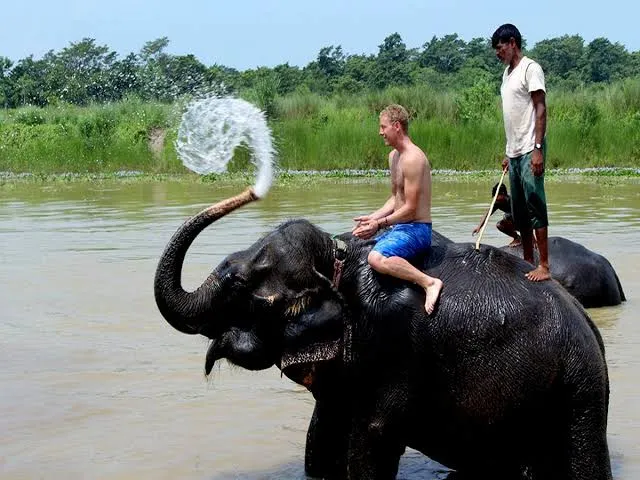
- Avoid elephant rides: Many travelers now avoid elephant rides due to welfare concerns. Jeep safaris and walks are better alternatives.
Frequently Asked Questions
What is Chitwan National Park famous for?
Chitwan is famous for one-horned rhinoceros, Bengal tigers, and its jungle safari experiences. It was Nepal’s first national park (1973) and a UNESCO World Heritage Site (1984).
How do I get to Chitwan from Kathmandu?
5–6 hours by tourist bus (NPR 1,500–2,500) or 20 minutes by air to Bharatpur (NPR 6,000–8,000). From Pokhara, 4–5 hours by bus.
What is the best time to visit Chitwan?
October–March is the best season — dry weather, cooler temperatures, and good wildlife visibility. Avoid monsoon (June–August) and hot late April–May.
How much does a Chitwan safari cost?
A 2-day/1-night package starts at NPR 8,000–12,000 per person (including accommodation, meals, guide, and safari). A 3-day/2-night package is NPR 15,000–25,000.
Read next: Lumbini: Birthplace of the Buddha — The sacred site where Siddhartha Gautama was born, and one of Buddhism’s holiest pilgrimage destinations.
Related districts: Chitwan, Nawalpur, Parsa, Makwanpur, Bara