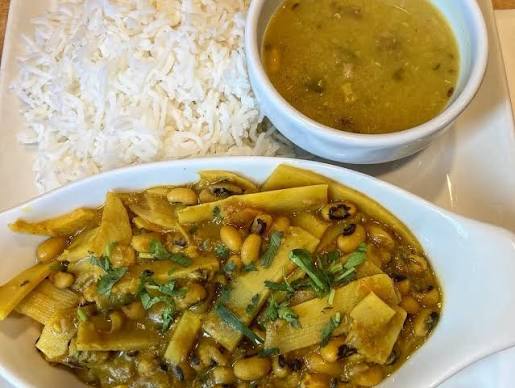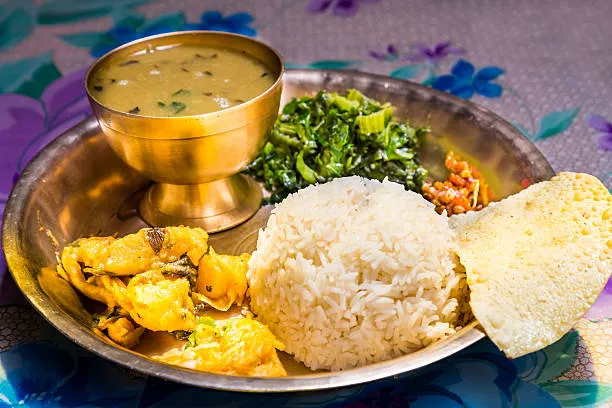
Dal Bhat (दाल भात) is not just a dish — it is the rhythm of daily life in Nepal. Translated literally, it means “lentils and rice,” but the meal is so much more. A proper Dal Bhat is a complete platter: steamed rice, lentil soup, seasonal vegetable curries, spinach or greens, pickles, and often a piece of meat or dried fish. It is eaten twice a day by millions of Nepalese — once around midday, once in the evening.
If you want to understand Nepal, you must understand Dal Bhat. It is the country’s comfort food, its staple diet, and its most recognizable culinary export.
What Is Dal Bhat?
Dal Bhat has two core components:
- Dal — a lentil soup, usually made from yellow or black lentils, tempered with cumin, garlic, ginger, turmeric, and sometimes tomato
- Bhat — steamed white rice, the foundation of almost every Nepali meal
But Dal Bhat is never served alone. A complete thali (platter) includes:
- Rice (bhat) — usually a large mound, refilled as many times as you like
- Lentil soup (dal) — served in a small bowl, poured over the rice
- Seasonal vegetable curry (tarkari) — potatoes, cauliflower, green beans, pumpkin, or whatever is in season
- Greens (saag) — spinach, mustard greens, or other leafy vegetables
- Pickle (achar) — spicy, tangy, made from radish, cucumber, or tomato
- Sometimes: papad (crispy lentil wafer), yogurt, or a piece of meat (chicken, buffalo, or goat)
How Dal Bhat Is Eaten
Traditional Nepali etiquette for eating Dal Bhat is specific and beautiful:
- Sit cross-legged on the floor or a low stool, with the thali in front of you
- Eat with your right hand only — the left is considered impure
- Mix dal with rice using your fingers, forming small balls
- Add a bit of curry, greens, and pickle to each bite
- Refill freely — hosts will keep pouring more dal and rice until you say stop
In restaurants, especially in tourist areas, Dal Bhat is often served with a spoon and fork. But at home, hands are the rule.
The Regional Variations
Dal Bhat is universal in Nepal, but each region has its own twist:
- Kathmandu Valley (Newar): Newar Dal Bhat is spicier, with more complex curries, sometimes buffalo meat, and traditional Newar pickles.
- Terai: More rice-heavy, often served with fish, and influenced by Maithili and Bhojpuri cuisine.
- Hills (Pahad): Uses local grains like millet (kodo) or buckwheat (phapar) instead of rice in higher areas. Gundruk (fermented leafy greens) is a common side.
- Himalayan regions (Sherpa, Tamang): Often uses buckwheat, tsampa (roasted barley flour), and yak cheese.
Why Dal Bhat Matters
Dal Bhat is significant for several reasons:
- Nutritionally complete: Rice provides carbohydrates, dal provides protein, vegetables provide vitamins, and pickles provide probiotics. Together, they form a balanced meal.
- Economic: It’s affordable. Almost every Nepali household can make it daily, and restaurants serve “Dal Bhat power 24 hour” as a budget-friendly meal.
- Cultural: It anchors daily routine. “Khana khayau?” (“Have you eaten?”) is a greeting in Nepal — and the meal in question is almost always Dal Bhat.
- Identity: For Nepalese abroad, Dal Bhat is a taste of home. For trekkers, it’s the fuel that gets them up the mountains.
Dal Bhat for Trekkers
On Nepal’s trekking routes — Everest Base Camp, Annapurna Circuit, Langtang — Dal Bhat is the trekkers’ meal of choice. Here’s why:
- Unlimited refills: Most lodges offer “Dal Bhat power 24 hour” — meaning unlimited refills of rice, dal, and curry for a fixed price.
- Easy to digest: It’s gentle on the stomach at high altitude.
- Warm and filling: It provides sustained energy for long days of walking.
- Affordable: At Rs. 500–800 (about $4–6), it’s the cheapest substantial meal on the trail.
The famous trekker slogan — “Dal Bhat power, 24 hour” — captures the sentiment: eat Dal Bhat, and you can walk all day.
How to Make Dal Bhat (Basic Recipe)
A simple Dal Bhat at home:
For the dal:
- Rinse 1 cup of yellow lentils
- Boil with turmeric, salt, and water until soft
- Heat ghee or oil, add cumin seeds, chopped garlic, ginger, and dried chili
- Pour the tempered oil over the dal
For the rice:
- Rinse 2 cups of basmati or long-grain rice
- Boil or steam until fluffy
For the tarkari (curry):
- Sauté onion, garlic, and ginger
- Add turmeric, cumin, coriander, and chili
- Add chopped seasonal vegetables and water
- Simmer until tender
For the achar (pickle):
- Grate cucumber or radish
- Mix with lemon juice, salt, chili, and ground sesame
Serve everything on a single platter and eat with your right hand.
Frequently Asked Questions
What is Dal Bhat?
Dal Bhat is Nepal’s national meal — steamed rice (bhat) served with lentil soup (dal), seasonal vegetable curries, greens, and pickles. It is eaten twice a day by millions of Nepalese.
Why is Dal Bhat important in Nepal?
It provides balanced nutrition, is affordable, and anchors daily routine. It is considered the country’s staple food and a symbol of Nepali identity.
What does “Dal Bhat power 24 hour” mean?
It’s a popular trekking slogan meaning Dal Bhat gives you enough energy to walk all day. On trekking routes, lodges offer unlimited refills of Dal Bhat for a fixed price.
Is Dal Bhat vegetarian?
Usually yes. The base version — rice, dal, vegetable curry, greens, and pickle — is vegetarian. Some versions include meat (chicken, buffalo, or goat).
Read next: Momo: Nepal’s Favorite Dumplings — The Tibetan-origin snack that became Nepal’s favorite street food.
Related districts: Kathmandu, Lalitpur, Bhaktapur, Kaski, Solukhumbu